

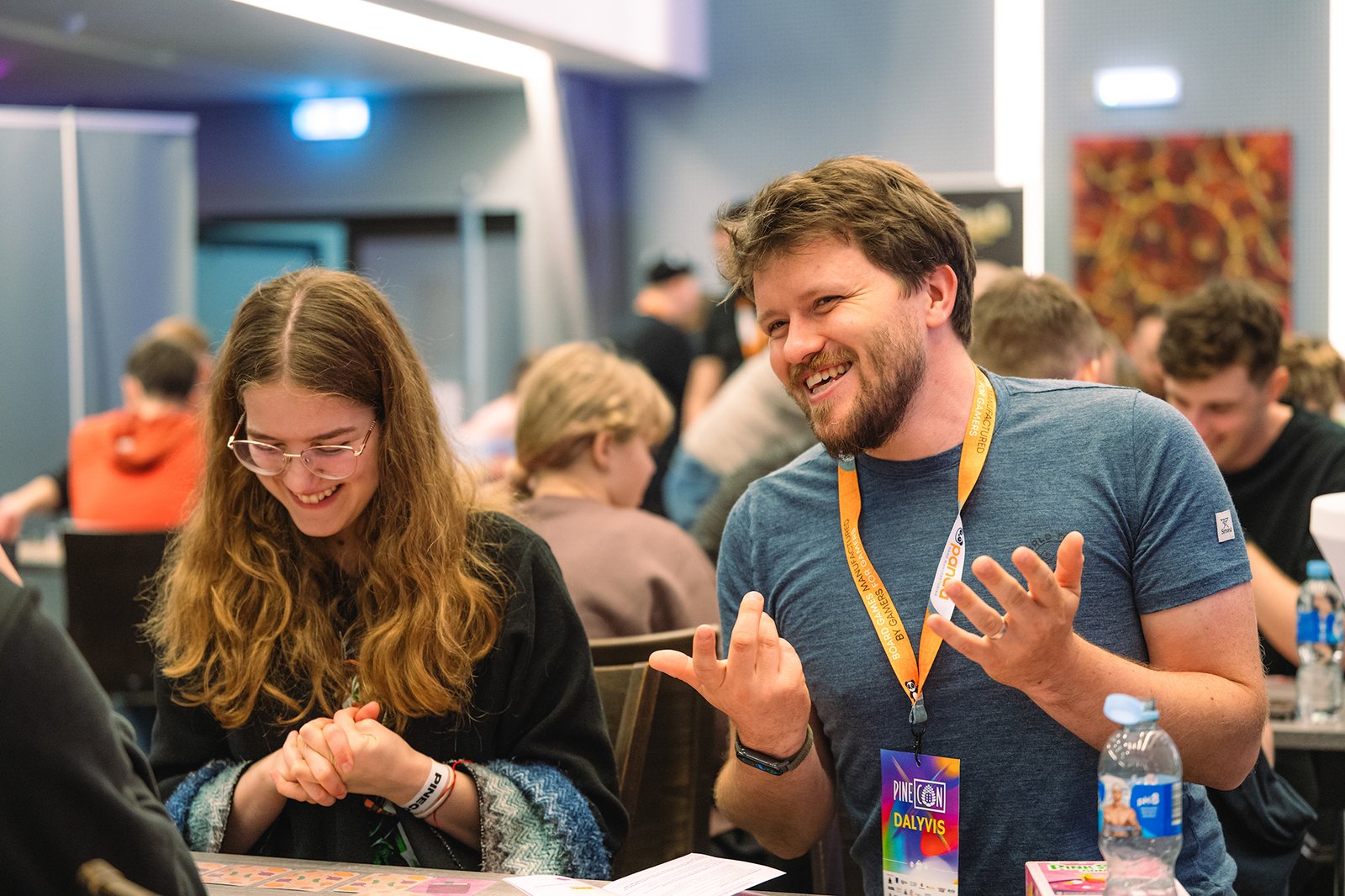
Briefly tell us about yourself. How did you discover the world of board games, and what inspired you to start designing games yourself?
My first board games, of course, were in childhood, quite primitive games, mostly based on luck. I wouldn’t say that I loved them then the way I do now. However, in a certain sense, that was when I first discovered creativity. I remember very clearly how we created our own Green Lakes Monopoly. I still have that board today.
My love for board games began together with my wife in 2015, when, while traveling around the world, we stayed for several months with a Lithuanian-Australian family in Sydney. It’s true that even then, we were not playing the kinds of games we enjoy today, but it was there that we discovered the power of board games. Those cozy evenings, shared adventures, and emotions experienced around the gaming table.
After returning home, we always enjoyed hosting groups of friends at our house. We never consumed alcohol, so we were constantly looking for ways to spend meaningful and enjoyable time together. I remember very well how, for one such gathering, we decided to rent a couple of board games: Ticket to Ride: Europe and Camel Up. From that moment on, our passion for board games only grew.
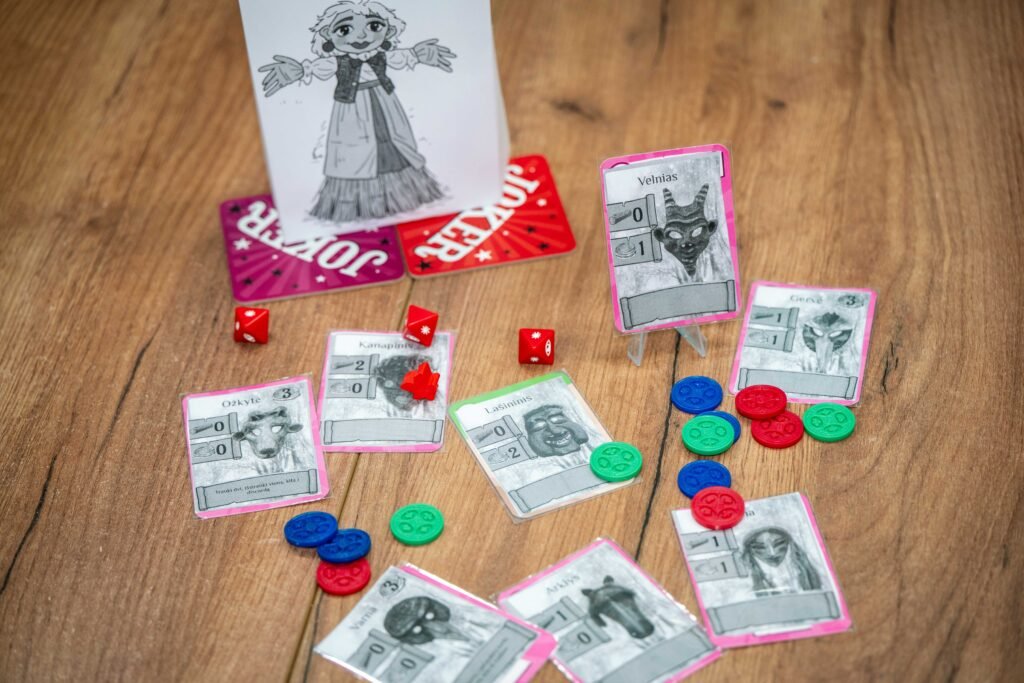
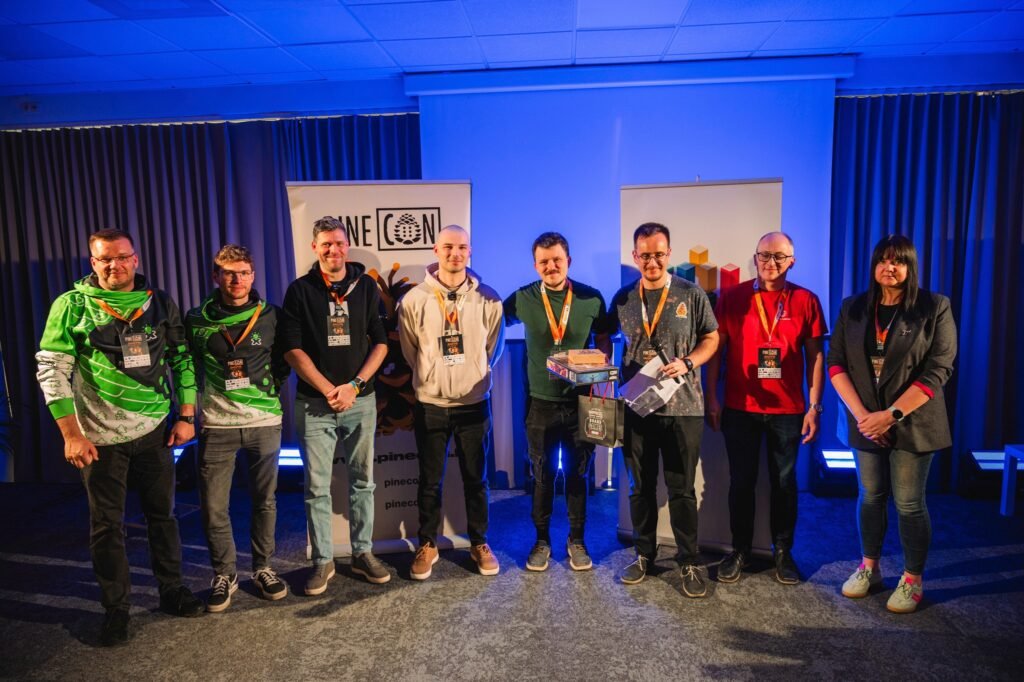
Board game design began somewhat differently. I think we are all creative; our creativity simply manifests itself in different areas. My creative journey began with videography and photography. I always enjoyed telling stories and capturing the stories of other people. My first board game prototype was born quite recently, in 2024, during a trip. At that time, my son and I started creating a game, and after returning home, we decided to enter the PineCon prototype competition. We managed to take 6th place, which gave me a great deal of confidence and motivation to continue creating.
So, as I mentioned, creativity has always been present in my life. It simply found a new form—now I try to tell stories through board games.
How was the idea for Pink Soup Game born? Why did you choose the theme of Lithuanian cuisine?
For several years now, I have been creating various board game prototypes on different themes. The idea for Pink Soup Game was born from a desire to celebrate, in my debut game, something that Lithuania can truly be proud of. That is how the idea of creating a game centered around cold beet soup came about.
I lived with this idea for about half a year until one day, while spending time with my three children, all the mechanics suddenly unlocked, and everything fell into place.
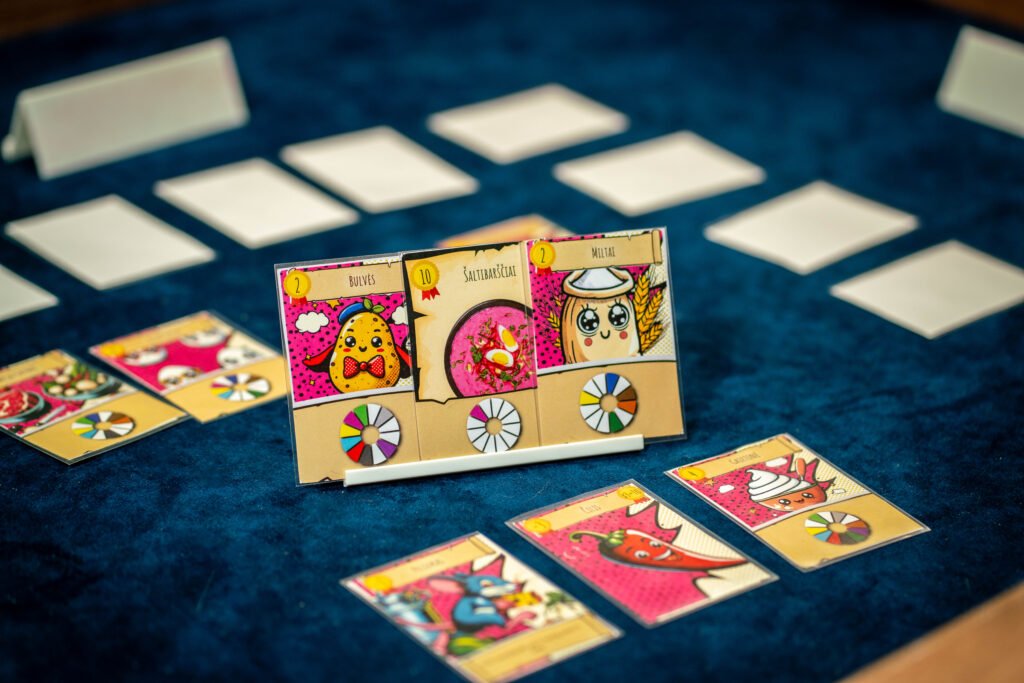
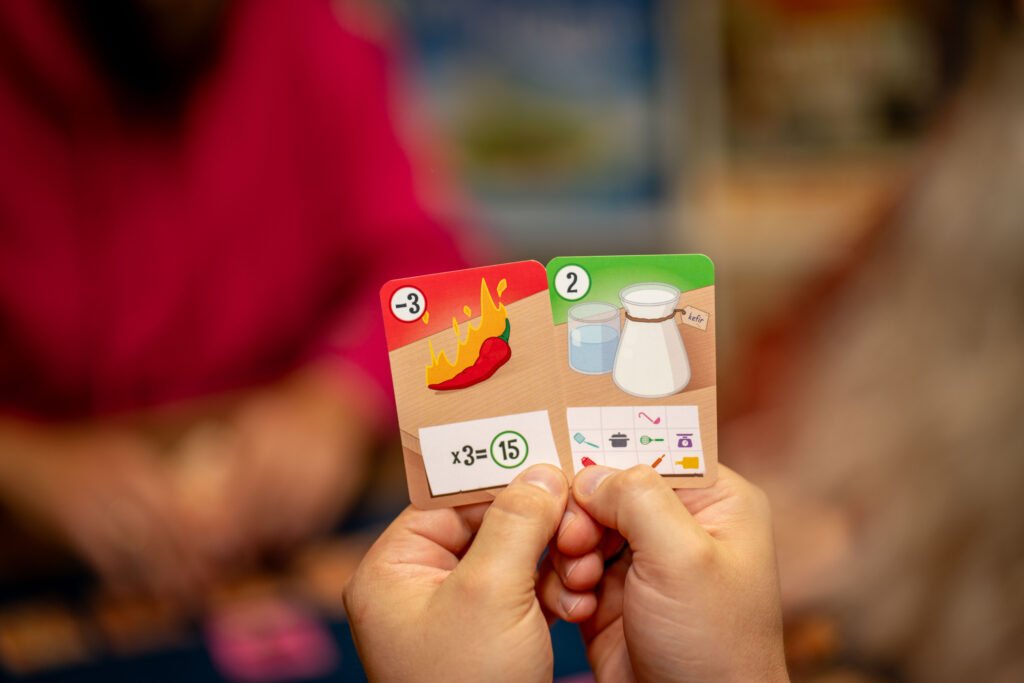
Pink Soup Game became a game in which everyone can feel like a master of Lithuanian cuisine, preparing traditional Lithuanian dishes. It is a game that celebrates our culinary heritage and invites people to take pride in it.
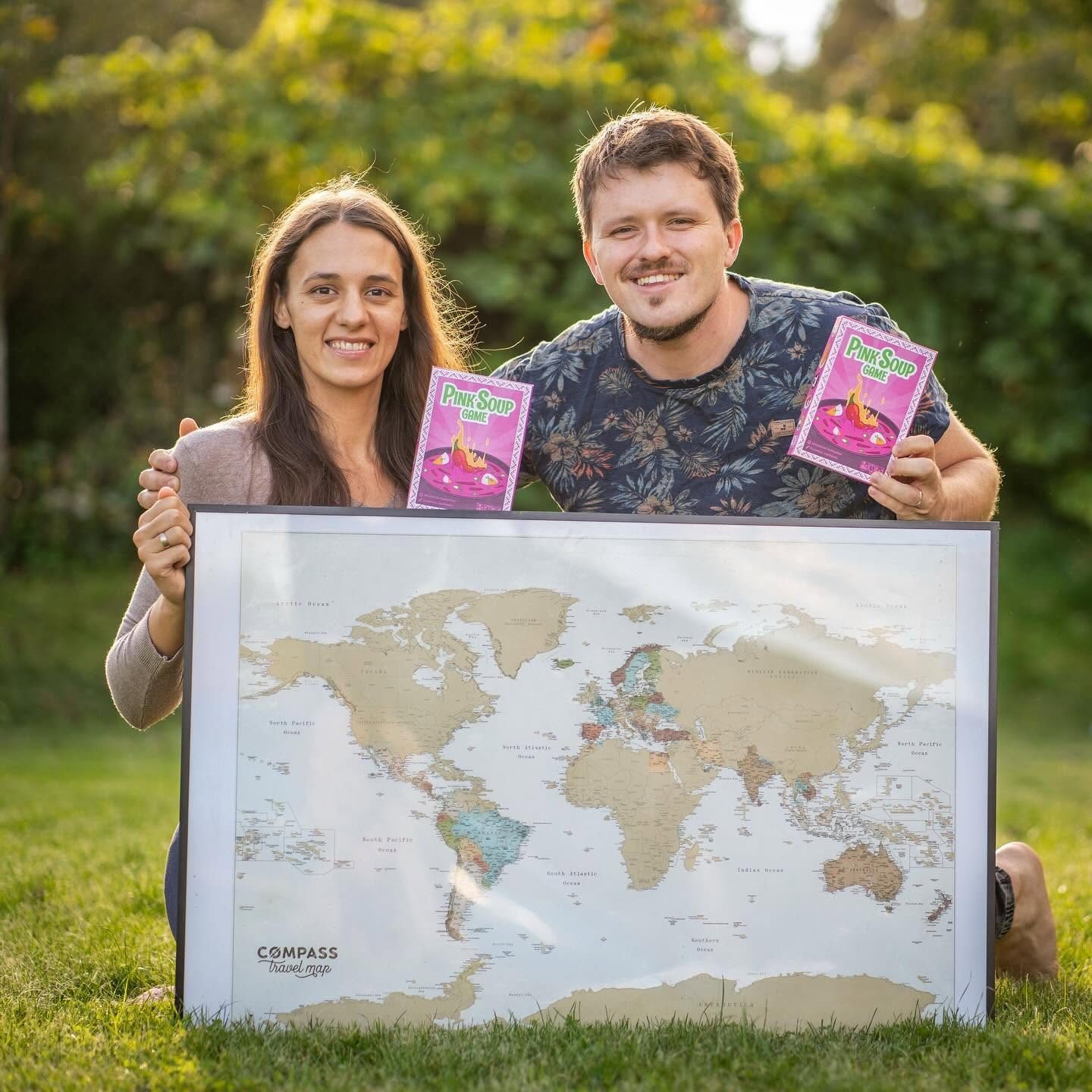
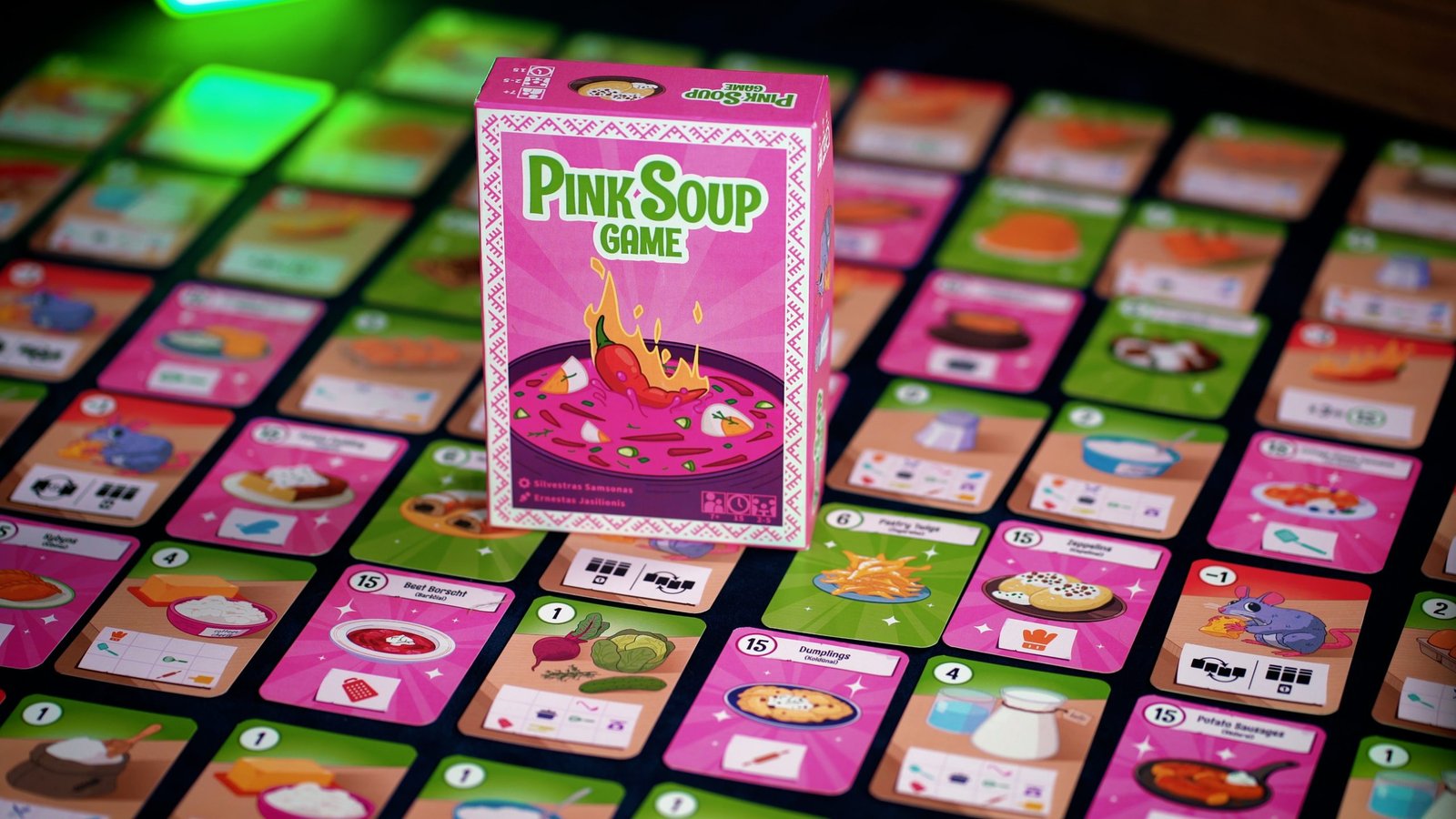
Your game was successfully funded through Gamefound. To what extent did the crowdfunding platform and the result meet your expectations?
There were two paths: to embark on this debut together with a publisher or to release the game independently. I chose the latter because I strongly believed in my project. I have always enjoyed creating and developing projects from scratch, and I also wanted complete creative freedom. Both paths have their advantages and disadvantages, so every creator has to find their own. I felt that Pink Soup Game had to be released independently.
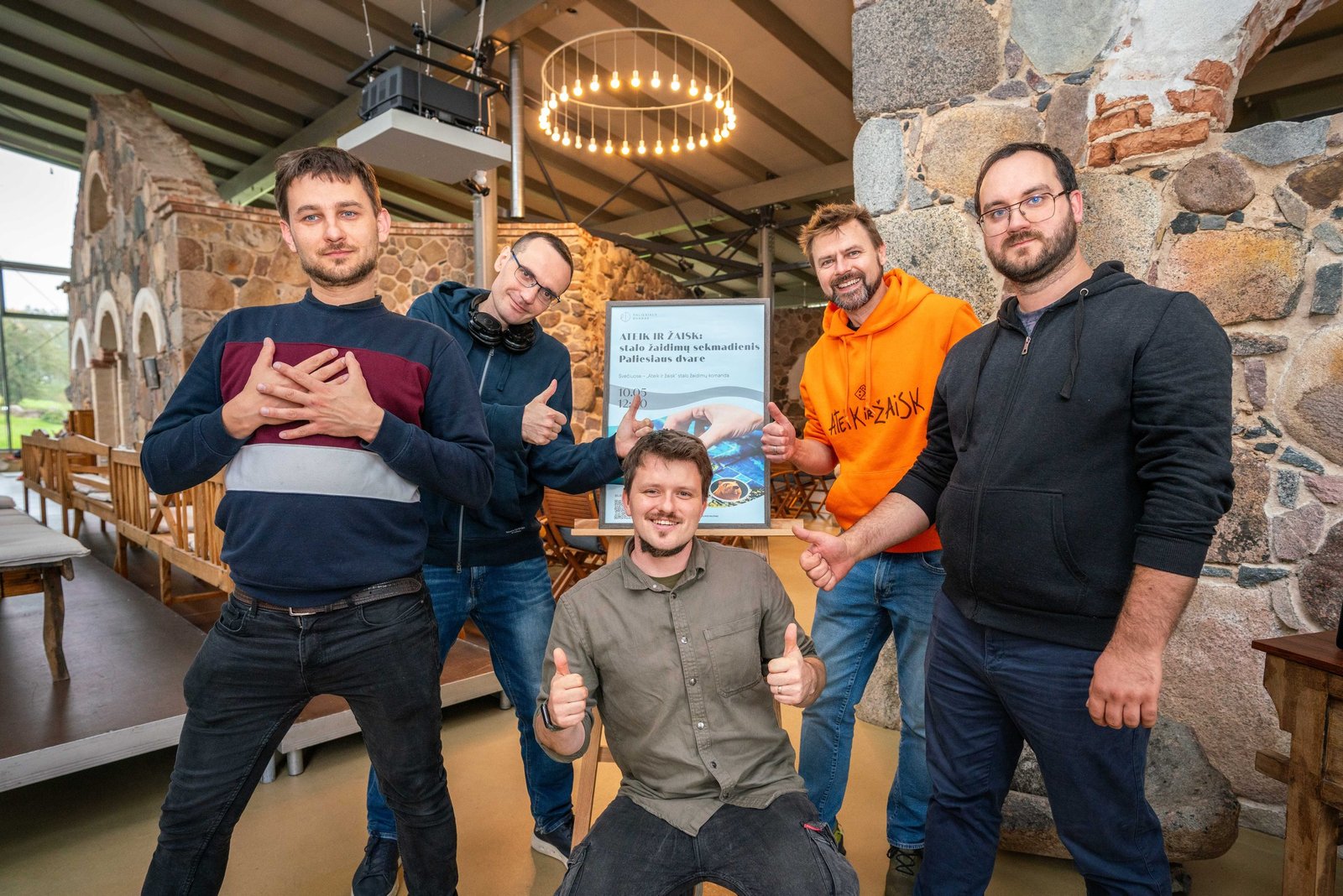
Publishing a board game requires significant financial investment, which may not even pay off. At first, I wasn’t thinking about crowdfunding, but later the thought occurred to me -why not give it a try? That same year, some excellent projects by Lithuanian creators appeared, as well as Brushstroke Mayhem, and after Pink Soup Game, Laužas was also released.
My goal was not to invest in Gamefound advertising – to allocate all available funds to the game itself. Because of that, it was very difficult to predict how the campaign would perform. There were many sleepless nights because I did almost everything myself. However, I received tremendous trust and support from people not only in Lithuania but also abroad. This experience became a great lesson and gave me the motivation to continue creating, even to increase the game’s print run.
What does your board game design process look like from the first idea to the final product? What usually comes first – the mechanics, the theme, or the specific player experience you want to create?
For me, as a player, the most important things are the theme and the game’s narrative. I have a long list of themes that I would like to develop and tell through board games.
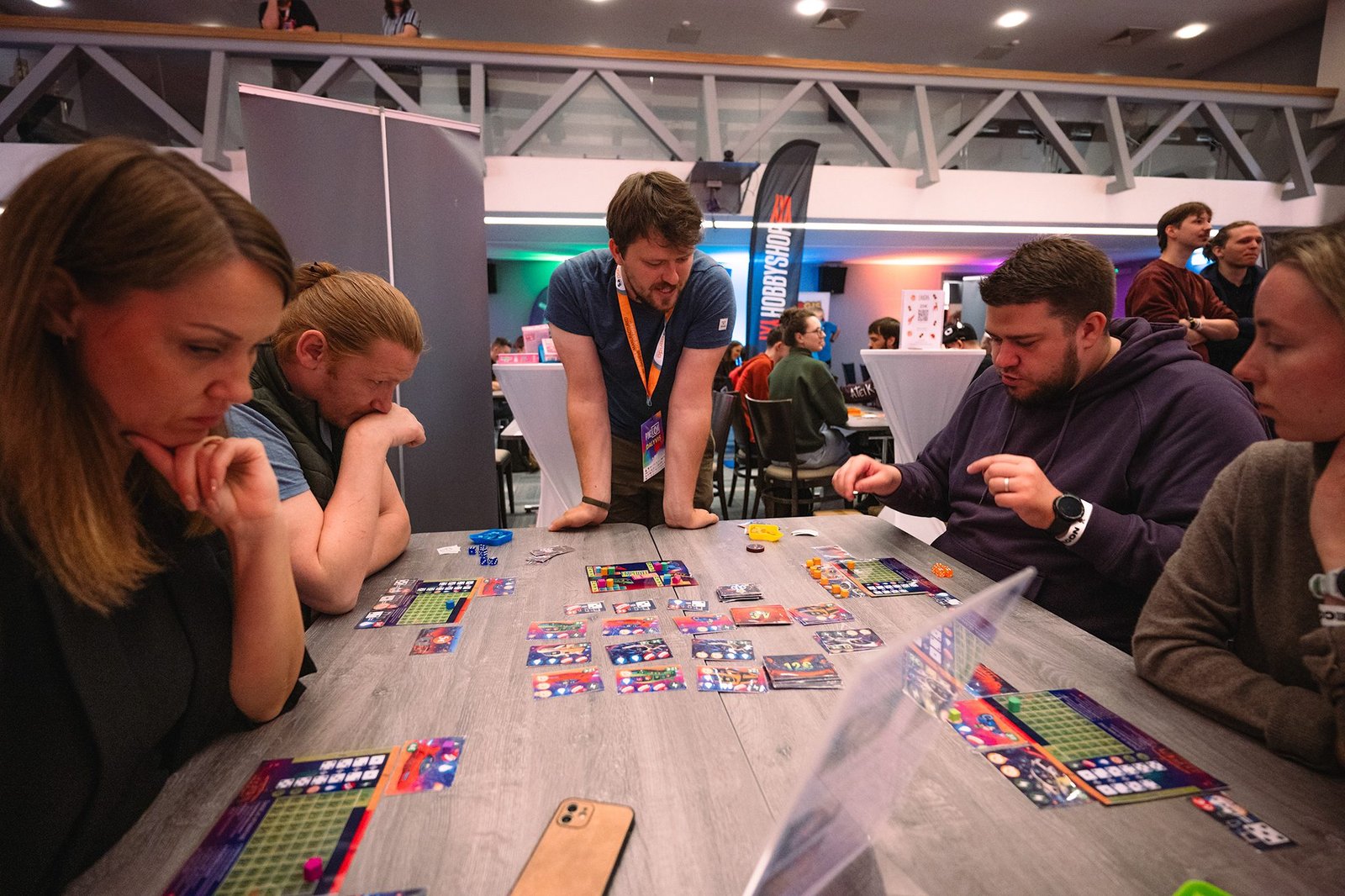
The theme comes first, then I clarify what emotions I want the player to experience, and only after that do the mechanics appear. To me, mechanics are a bridge between the theme and the emotion—a tool that helps the player experience the story I want to tell. Then comes the longest part of the journey: playtesting. Players who test unfinished, non-functioning games deserve statues. I am fortunate to have a large family, so we can do a lot of testing internally before taking games elsewhere. It is also wonderful that we have the Prototypes Guild in Vilnius, where so many dedicated creators gather. The secret of a good, functioning board game lies in testing.
Are there any authors, books, game designers, or other creators whose work particularly inspires you?
I grew up most strongly with cinema, so I have always admired the ability of directors such as Kubrick, Hitchcock, and Tarantino to tell stories through different means and maintain the audience’s attention. Later, Wes Anderson joined that list as well, and I am equally fascinated by his creative work.
Today, what inspires me most is variety. Especially in the world of board games, I enjoy trying as many different creations as possible and observing how authors tell stories differently, use mechanics, and direct players’ attention.
Also, my greatest inspiration is my family – my wife Agnė and our children. Many ideas are born through shared experiences and moments; it’s as if you gain extra eyes that let you see the world in different ways. In that sense, my loved ones are an inseparable part of my creative work.
You work in the field of visual creativity. How does your experience as a videographer or photographer help when creating board games? Do you see the world differently from most game designers?
Perhaps because I came from the world of videography and photography, I pay more attention to thematic depth, atmosphere, and storytelling. I think we all see things differently, and regardless of the world or profession we come from, we bring a great deal of ourselves into our creative work. We are all unique.
Is visual storytelling, composition, and the creation of emotions just as important in board games as it is in visual media?
For me, yes. Without storytelling and emotion, a board game is simply a collection of mechanics. Mechanics are important, but it is the story and emotional connection that bring a game to life.
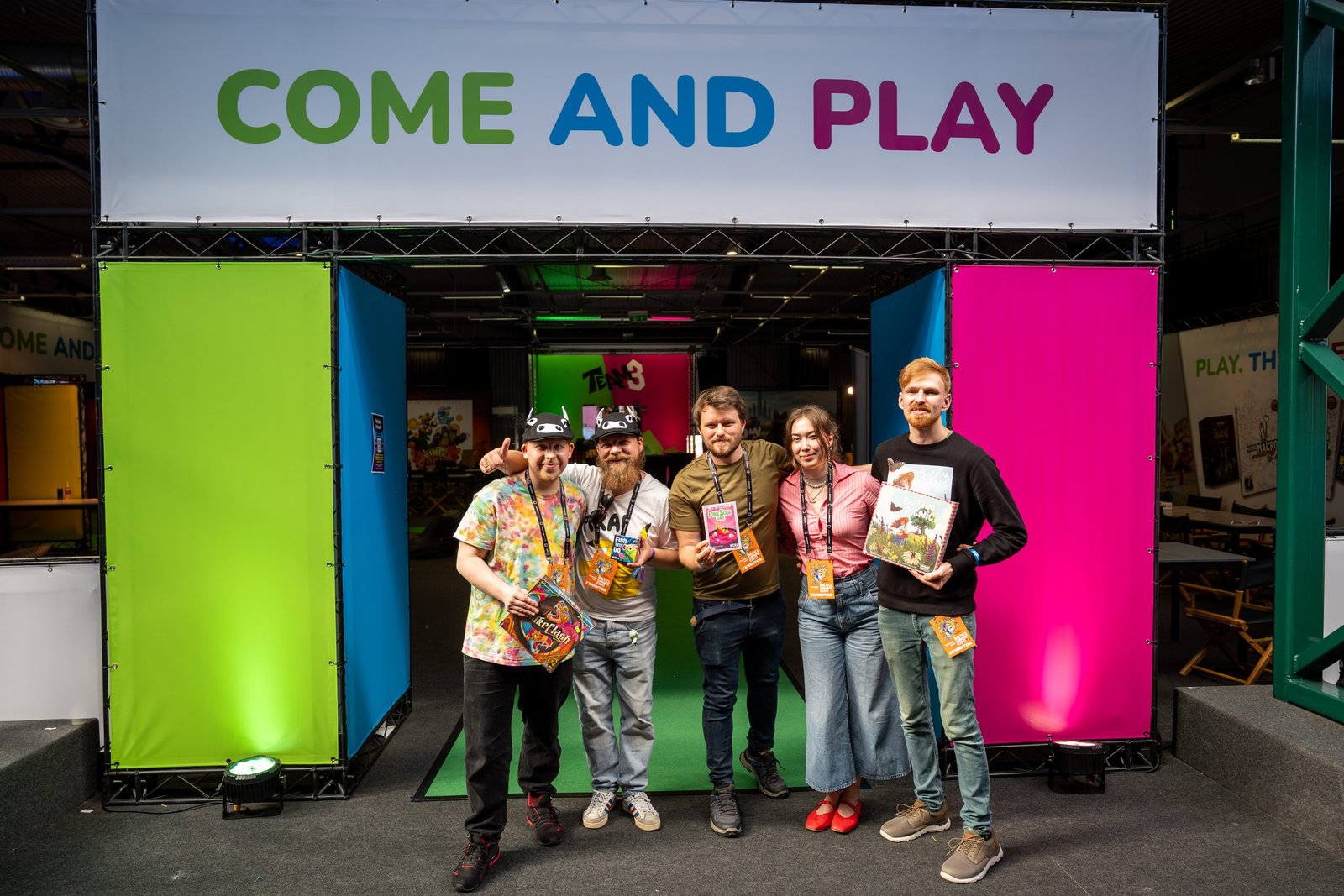
What does it feel like to be part of the Lithuanian board game industry today? What does participating in events, exhibitions, and festivals personally give you? Are the best ideas, partnerships, or simply motivation to continue working born there?
The feeling is wonderful, and I think this is only the beginning. I am delighted that the debut Pink Soup Game found its place in the sun and that the first print run sold out so quickly. At the same time, I see enormous potential for board games in Lithuania.
Participating in events, promoting the hobby, taking photographs, or creating video content, hopefully contributes, at least in a small way, to the popularity of board games. I am the father of three children, and I also run board game clubs for school students, so I see their tremendous value. Board games can develop imagination, creativity, communication, and problem-solving skills. Therefore, I would like children to discover the benefits of board games as early as possible, especially in this digital world. It is a wonderful feeling when children around one table laugh, celebrate, feel sad, communicate, and simply exist in the moment – without masks.
I know that you are working on a new project called World in Me. How will this project differ from your previous works, and what can players expect? Or perhaps you have another game that may reach us even sooner?
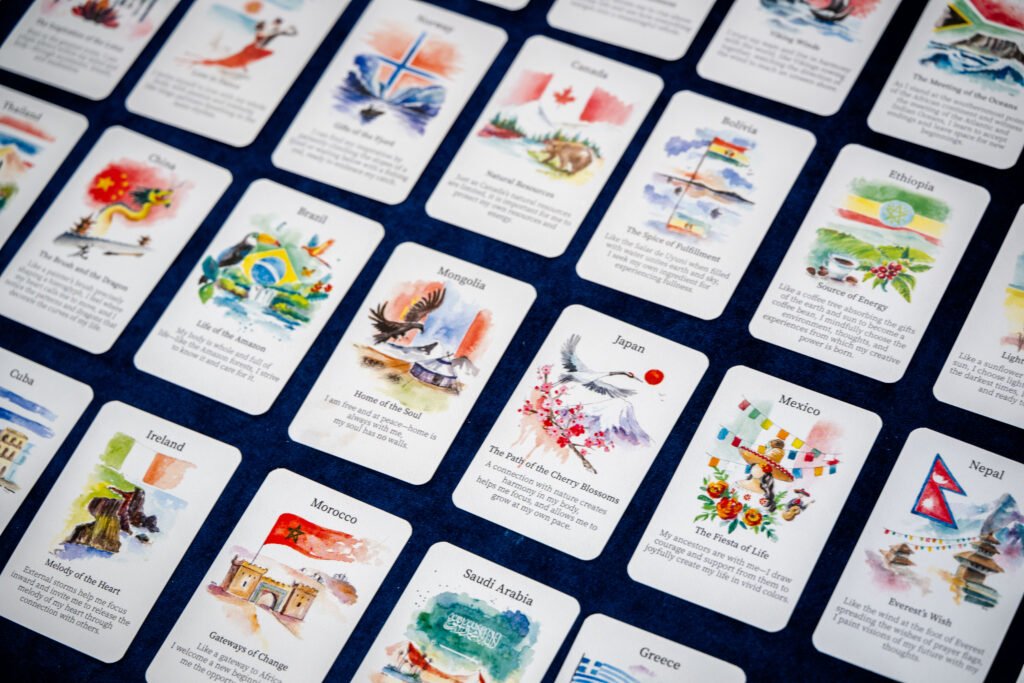
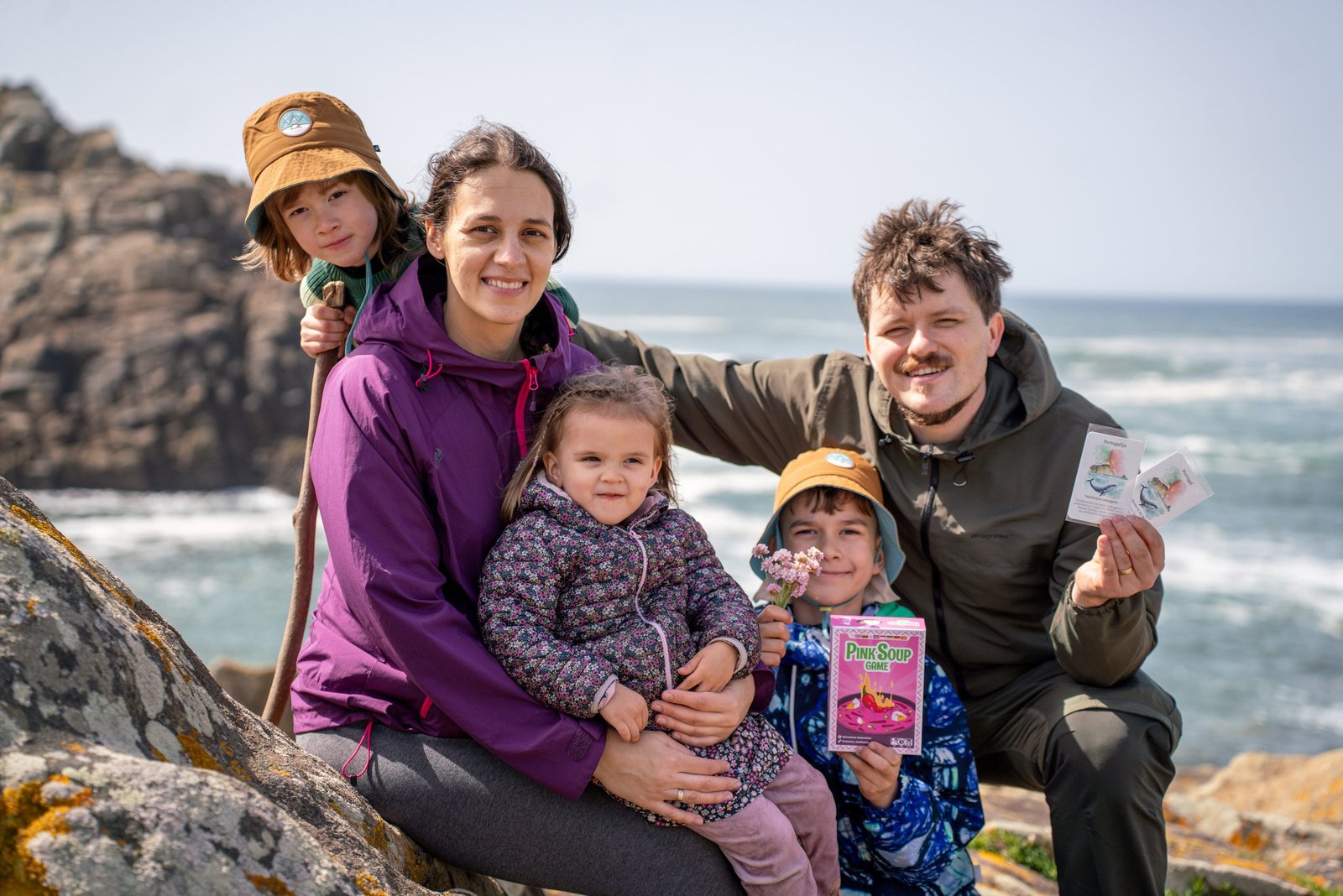
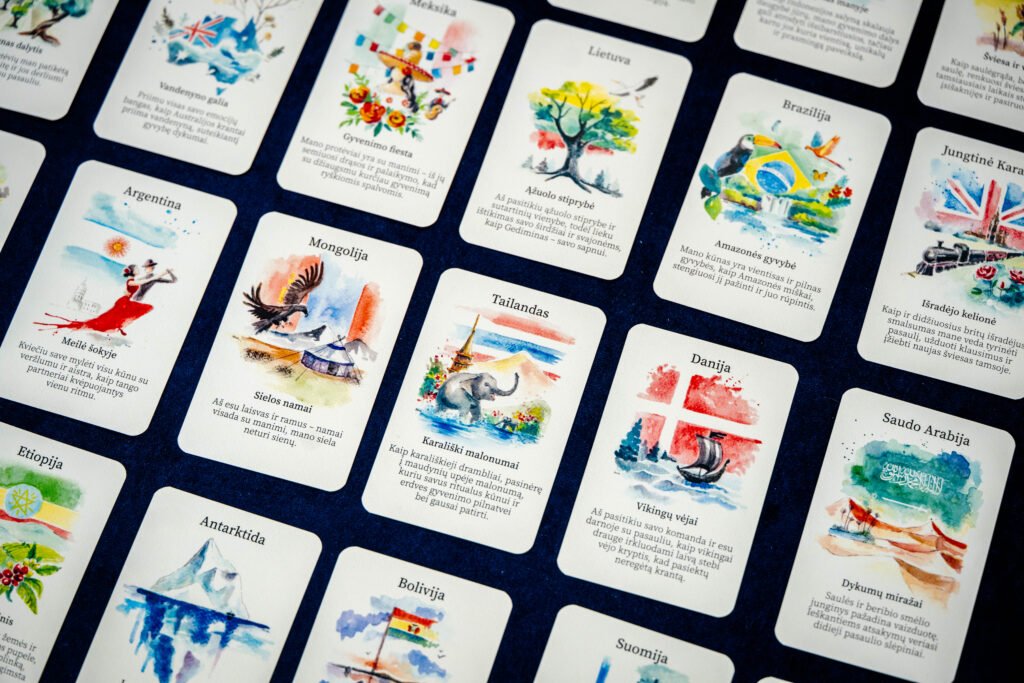
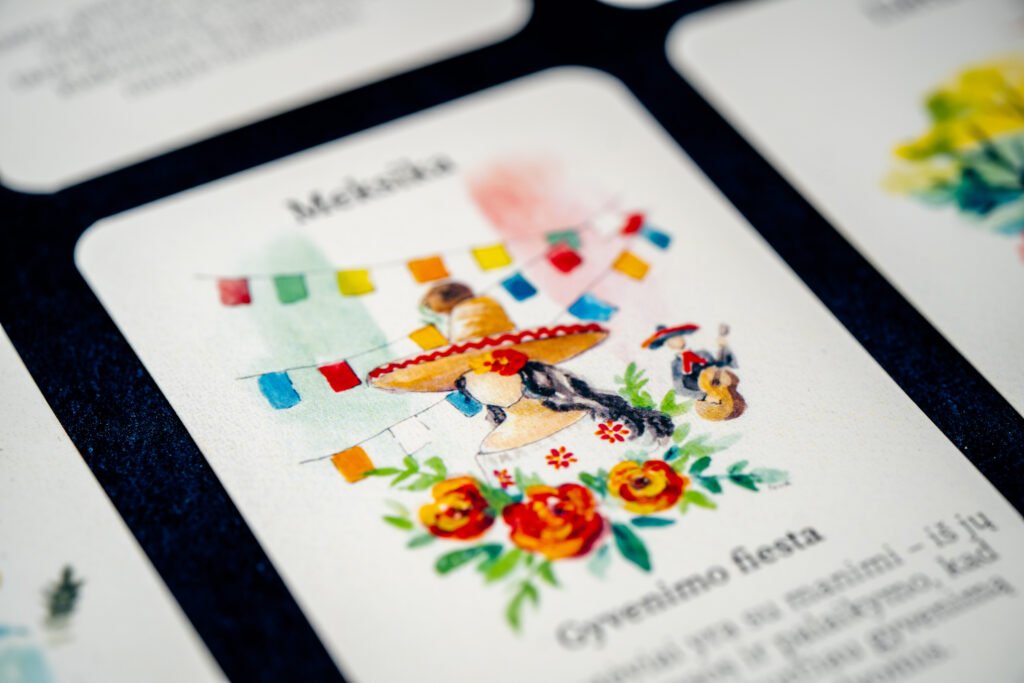
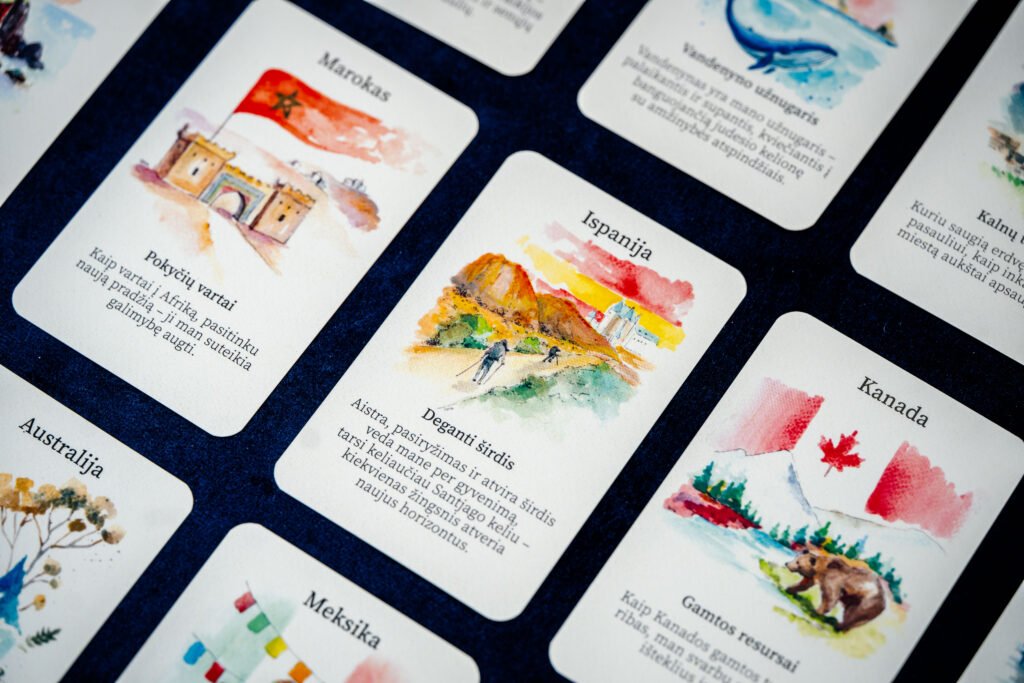
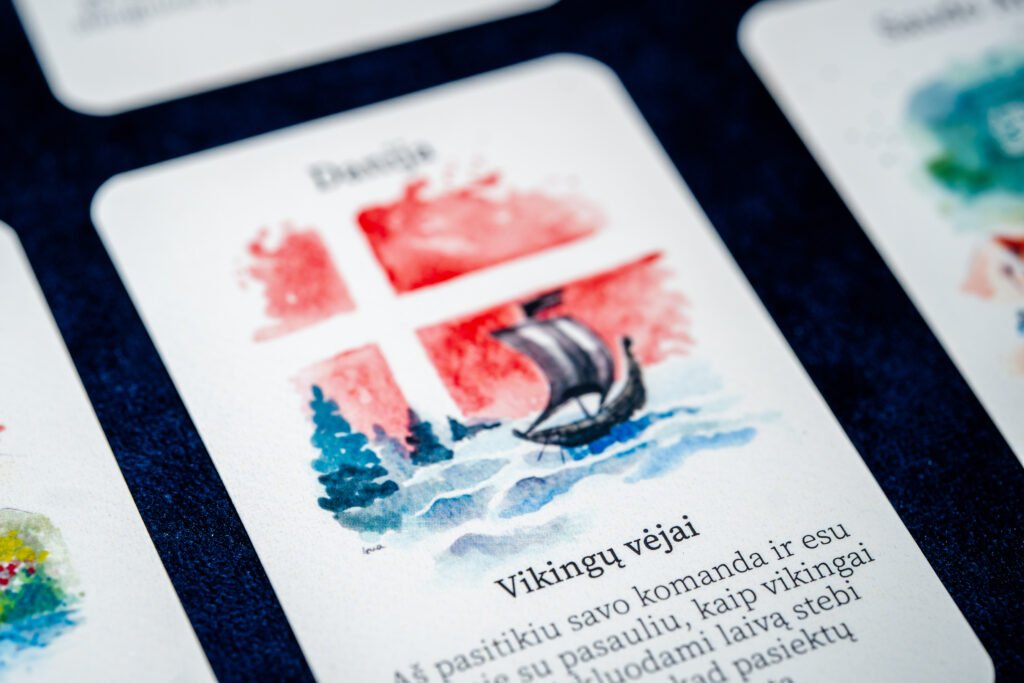
The World in Me is a set of affirmation cards about countries around the world that my wife and I are creating together. We are passionate travelers, so we wanted to create a project that spreads positivity and encourages people to explore the world. It is like a journey around the world in a single deck of cards.
At the moment, I am also developing other projects that are at very different stages of development. I hope that later this year I will be able to share more details about at least a few new creations.
What advice would you give to a creator who has their first board game idea today and is wondering whether it is worth turning it into a real product?
First of all, I would encourage them to dare to create. It seems to me that most people do not pursue their ideas not because those ideas lack potential, but because they lack the courage to begin.
As soon as an idea is born, we often begin to doubt ourselves: Will anyone find this interesting? Am I capable of doing it? Is it worth trying? But I want to encourage everyone—if you truly want to create, you can do it. There is a creator hidden within each of us; we simply need to allow that creator to emerge.
I find it very beautiful that board games are created by people from all kinds of professions. That is exactly what makes this world so interesting, diverse, and constantly surprising.
Although the board game community is relatively small, it is genuine and strong. Therefore, I invite everyone to create the basic framework of their game as quickly as possible and bring it to show others. Only by helping one another can we create truly wonderful things. To me, that is what board game design is all about.
Purchase the Pink Soup game here
Follow the World in me in the Gamefound platform
Leave a Reply