

Initial Idea
The process of creating the board game began with a search for a mathematical formula for the game. I knew that conceptual games exist, such as Dixit, A Fake Artist Goes to New York, and similar titles, but for my first creation, I wanted to use numbers. Unlike conceptual games (often based on a single rule), games that incorporate mathematics are more complex and raise more problems; they have strong potential for learning. Learning in a broad sense was one of the main goals.
Numbers themselves both complicate and enrich the core of a game. Even small changes can overturn the entire game economy. If the game is balanced, players will expect that more expensive actions are stronger and more useful. While playing, we feel that we are not being deceived; the rules lead to logical and measured consequences, and we can plan our actions and achieve roughly the results we expect. This means that even when we lose, we understand why it happened. At the same time, we understand what to do differently next time. Sounds natural and life-like? Yes. But how do you design that?
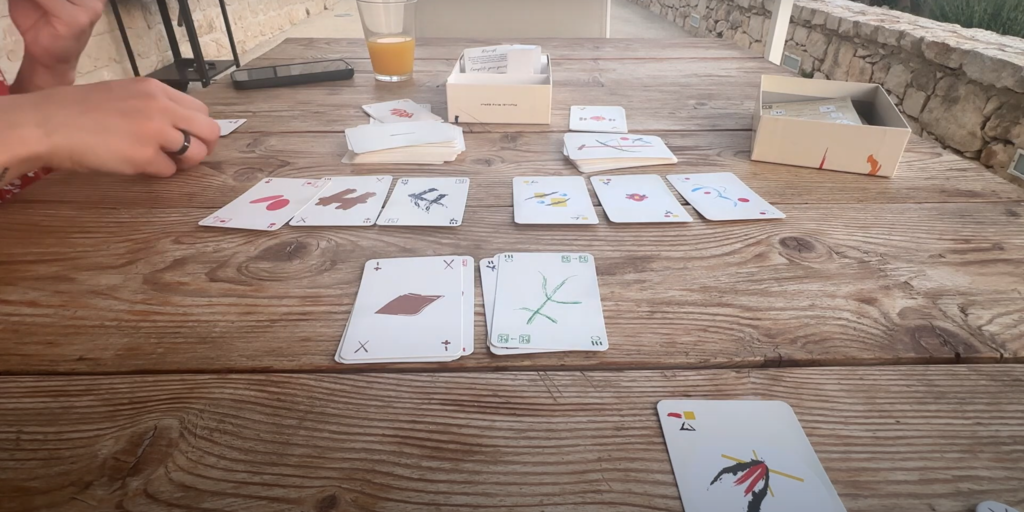
The initial idea for Brushstroke Mayhem was similar to many light mathematical games, for example, UNO. Wanting a slightly more complex game, I tried to create rules that would allow players to experience the weight of decision-making. The game, originally titled Weekend, was based on a balancing model where the goal was to enrich your weekend set with as many different activities as possible, while ruining your opponent’s weekend (by playing loud music or drilling with a power drill). Unfortunately, this idea failed because the mathematical model did not work. Personal planning was not engaging, while interfering with the opponent felt too punishing.
Eventually, I realized that the game must contain untouchable ownership. At least in this design, I rejected the idea of allowing players to interfere directly with each other’s space.
Board Game Guild – Community and Development
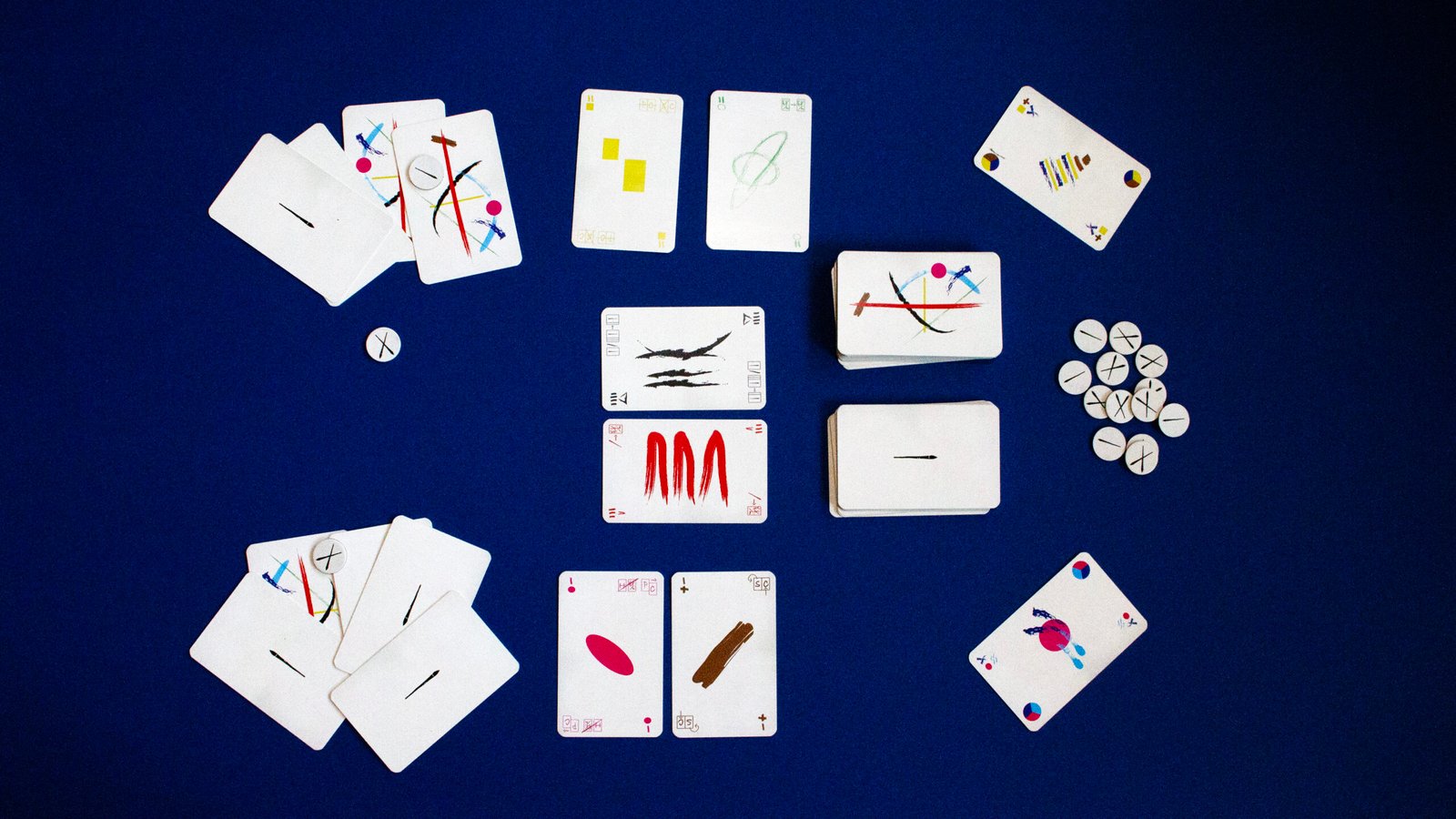
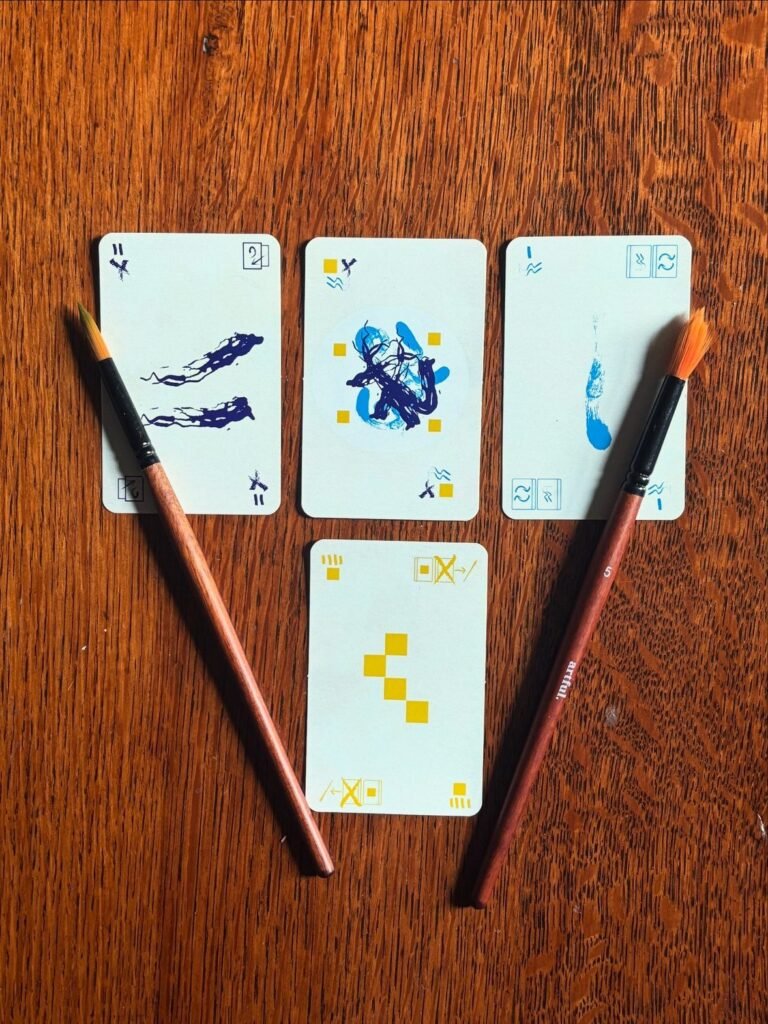
Since I already had a shaky foundation, and the game involved collecting different color combinations, it was time to find a theme. This is how the new title, Extravagant 9, was born. The number represented the quantity of different colors, while extravagance suggested the desire to be the most vibrant. The visual style and mechanics already began to resemble Brushstroke Mayhem. Goal cards and abstract painting appeared.
An interesting idea in Extravagant 9 was assigning different weights to different colors. Less frequent colors allowed players to draw more cards, while frequently appearing colors were more useful for completing goals (paintings). Although this tension was interesting, it became distorted at the table by the “pressure” created by the goal cards players held. A player always wants to win faster, so they rarely wait for the most efficient moment and simply finish the game (or move toward its end). Stretching the rubber band becomes pointless.
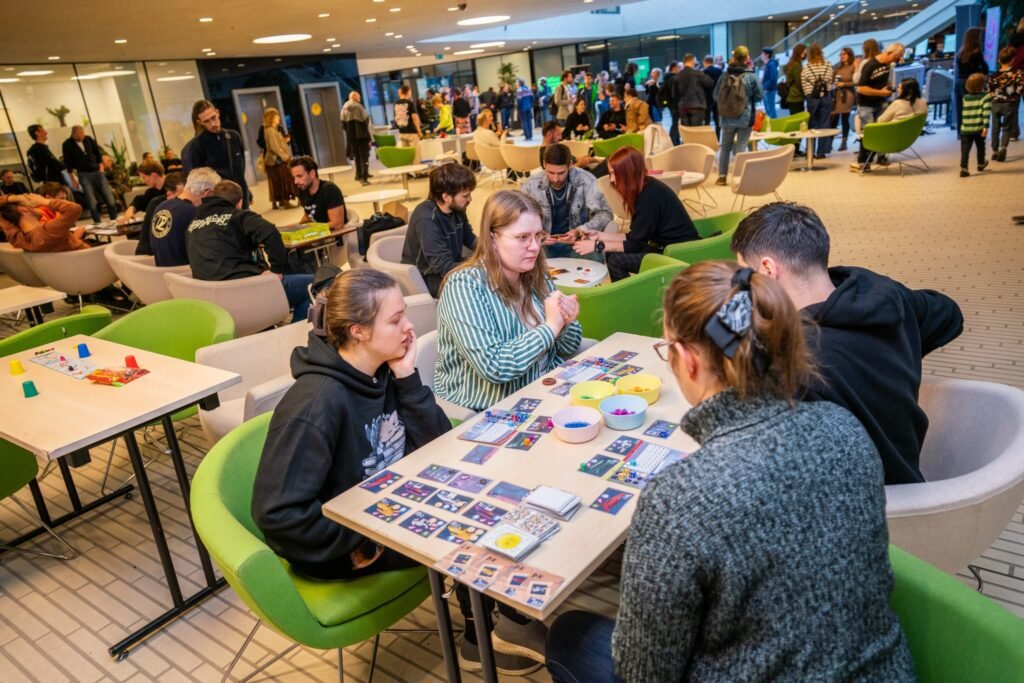
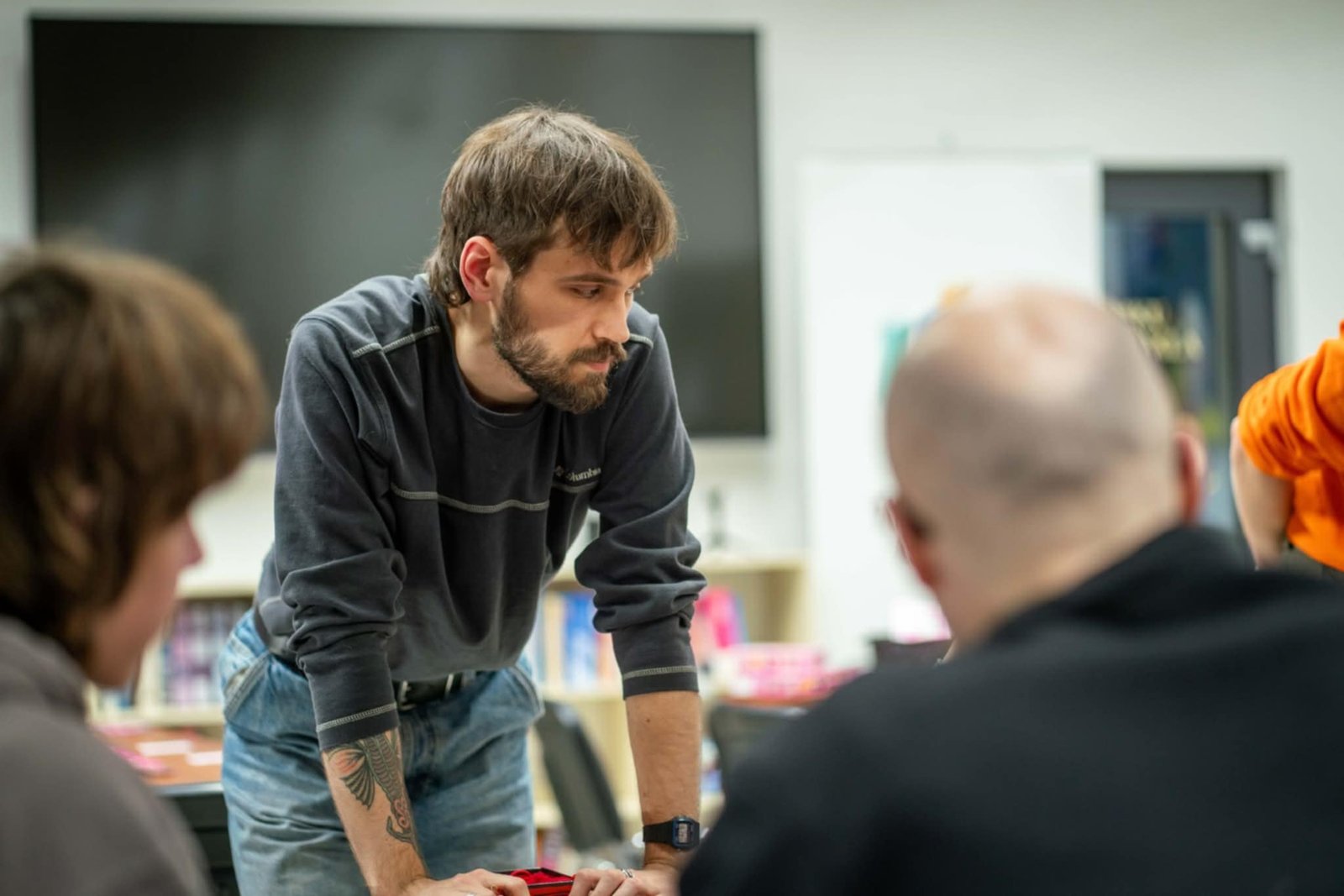
Over time, I realized that I needed more outside opinions, so I joined the board game club Prototipas, where I presented a slightly improved version. Some players liked it, others had nothing to do for half the game. Five people played. The game was unbalanced and lasted too long. The main mistakes were two:
Too many colors in the game (tracking 9 colors creates excessive cognitive load).
The blocking tokens were unnecessary and, with more players, created a lot of meaningless downtime.
Pinecon
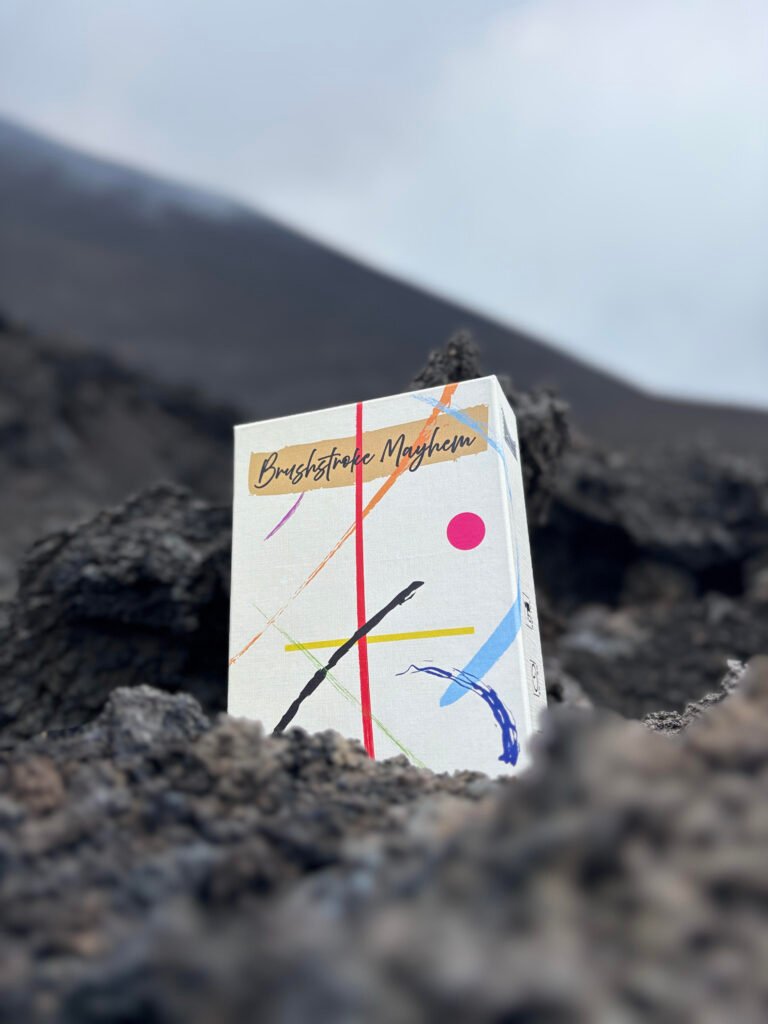
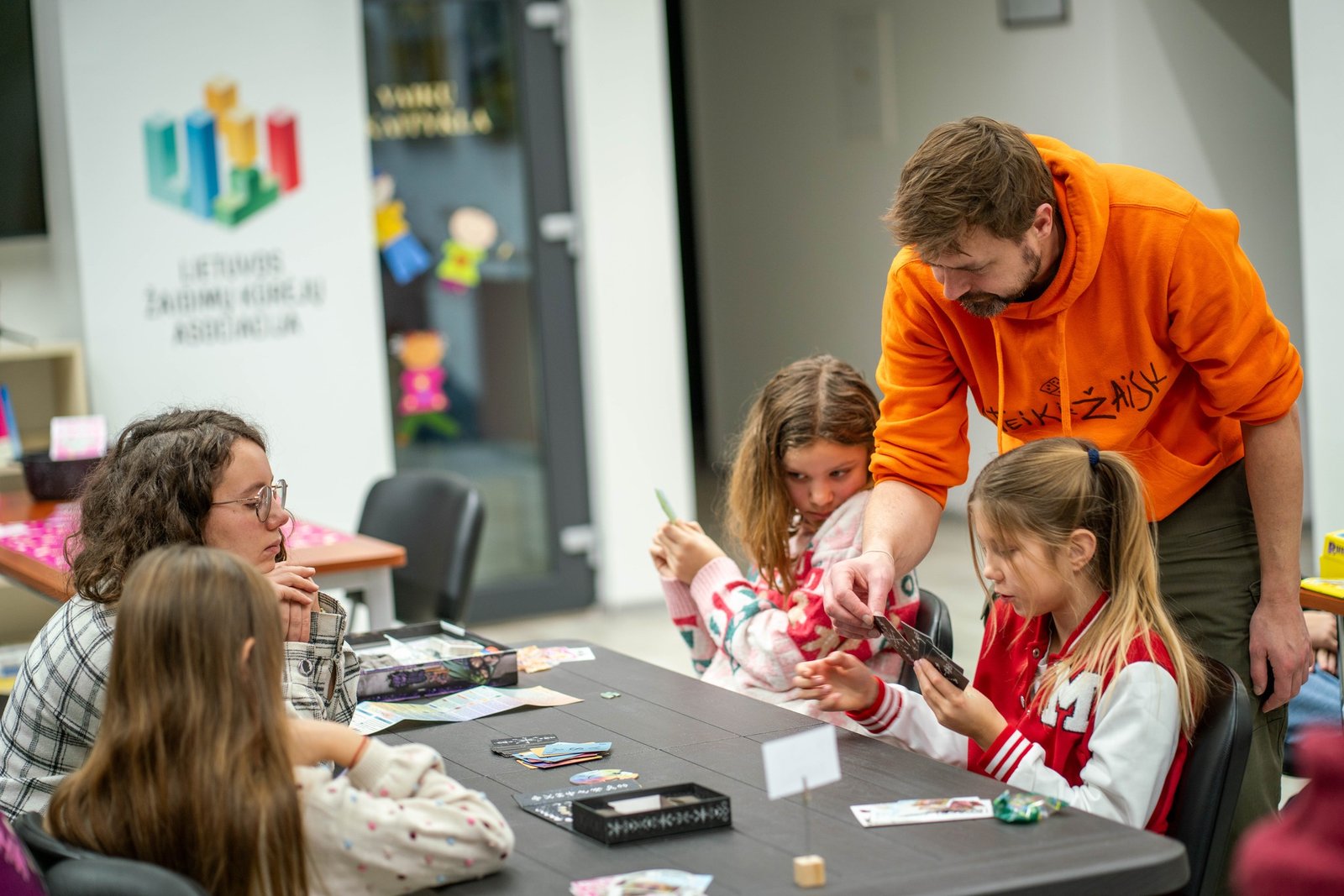
First of all, it was worth celebrating that the game was selected for the festival. The event not only provided a chance to practice presenting the game and to connect more closely with the community, but also unlocked several mechanics that had not been used before, and without which the game would not be what it is today. At this point, I was already calling the game Brushstroke Mayhem, and it was mathematically sound. It consists of 64 colors (8×8) and 32 drawings (goals) in which every color appears the same number of times. An empty-hand rule was introduced that allows players to gain resources, and the game includes a catch-up mechanism that helps players who are falling behind the leader.
The festival is going well. I receive good feedback and some criticism, but something unexpected happens. Designers Rokas Juozulynas and Vytautas Kandrotas sit down at the table, and the game stalls. For the first time. The interruption mechanism prevents anyone from finishing the game. A system that was meant to slow down players in the lead becomes a dead end.
Other important meetings were with the reviewers, Board Game Hangover, and several designers from Poland. Both groups felt that it was difficult to understand what the opponent had. This insight led to the decision to introduce an Open Market mechanism. Instead of drawing cards from the top of the deck, players choose from several visible options that everyone can see. This increases interaction, reduces randomness, and—if desired—allows players to slightly block their opponents.
Although the process continued with tests among friends and further sessions at the club, the key moments that changed the design had already taken place. The result is a colorful set-collection game with several difficulty levels. Suitable for both a student and a president. It allows players to feel their progress and to grasp how abstract art emerges.
Leave a Reply