
Petras Šimonis
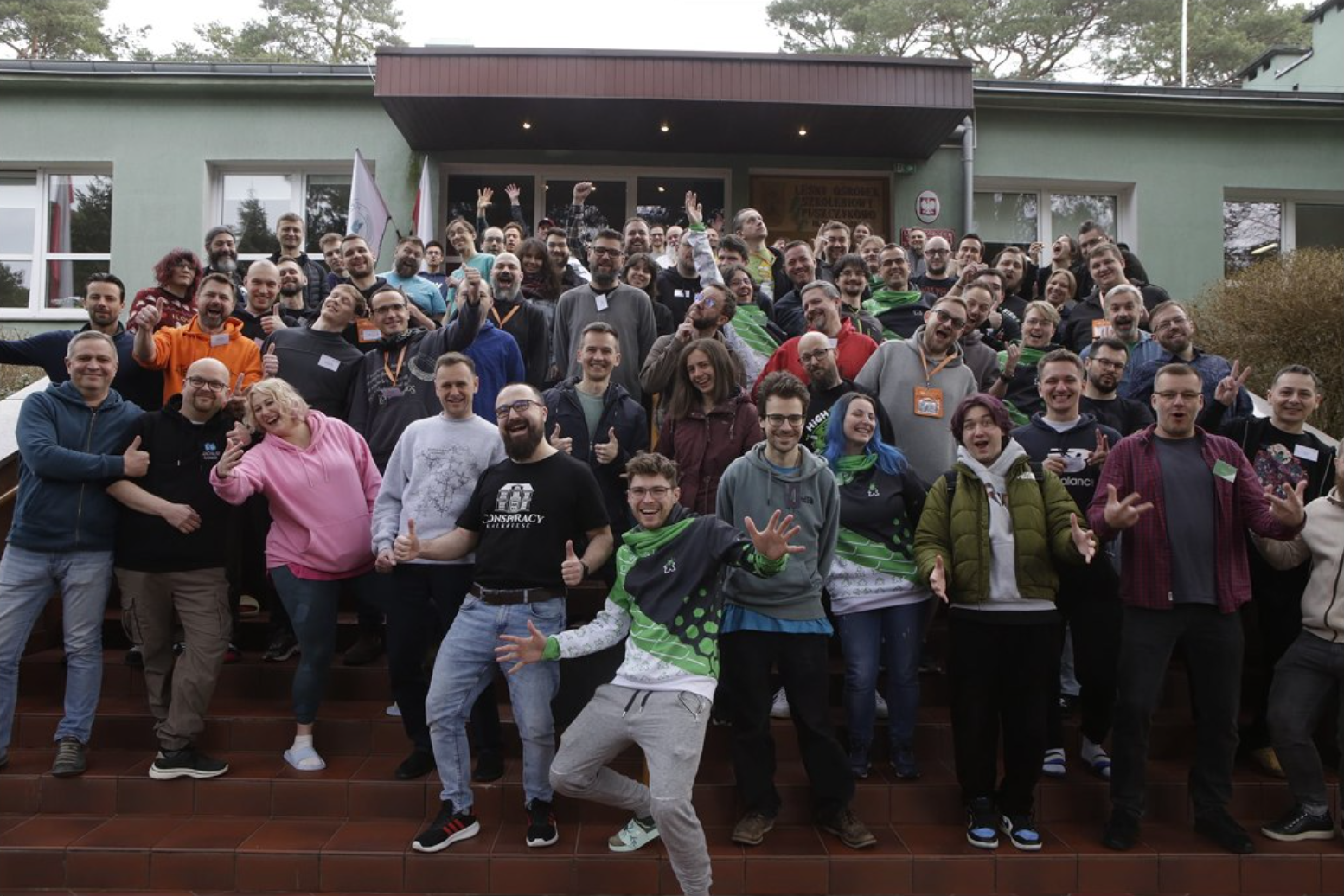
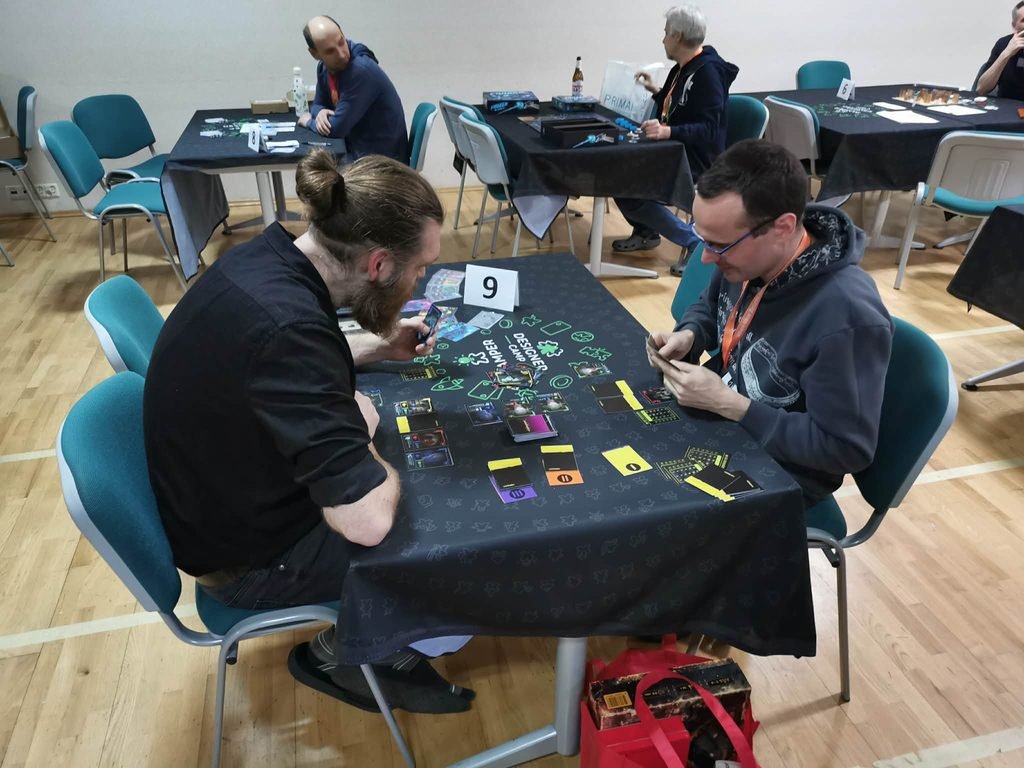
Designer Camp is an international gathering of board game designers held in Poznań, Poland, organized by the Pamper Playtest Group.
Designers and publishers from various countries meet at this event. It is clear that Polish participants dominate in numbers, but all lectures and playtesting sessions are conducted in English.
Over several intensive days, we focused on playing games, exchanging feedback, attending lectures, and pitching our games to publishers.
This year, the event attracted around a hundred designers and a significant range of industry representatives—from small independent publishers to companies such as Asmodee, Rebel, and CGE. It is worth mentioning that Kadabra has been representing Lithuanian publishers for several years.
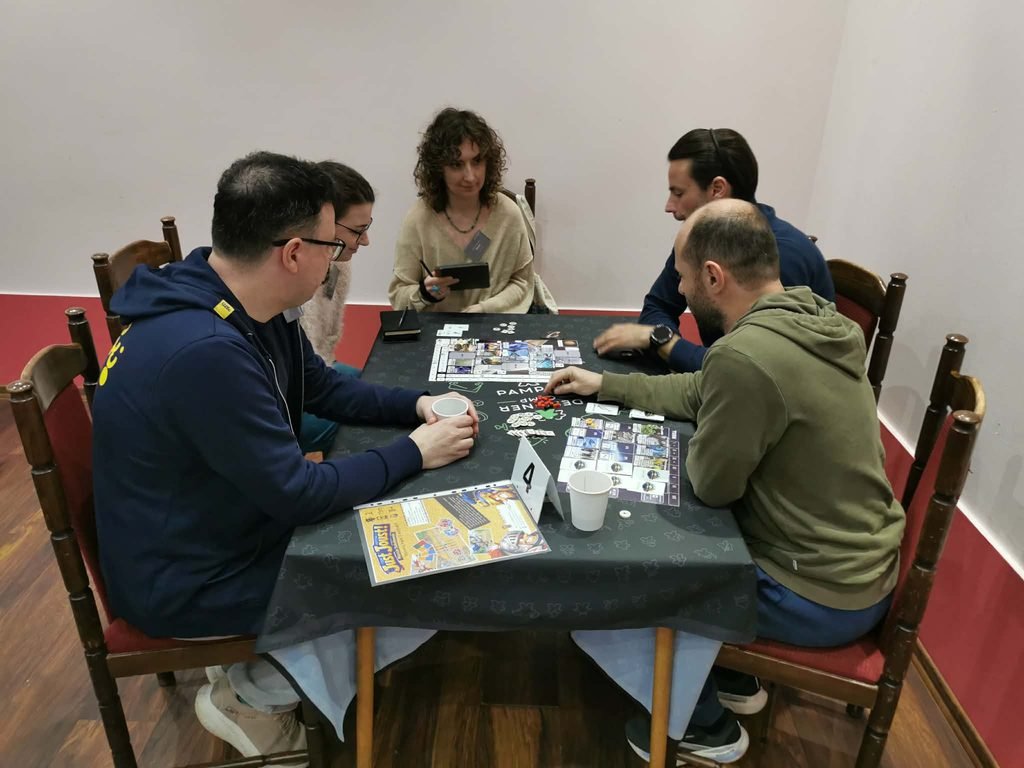
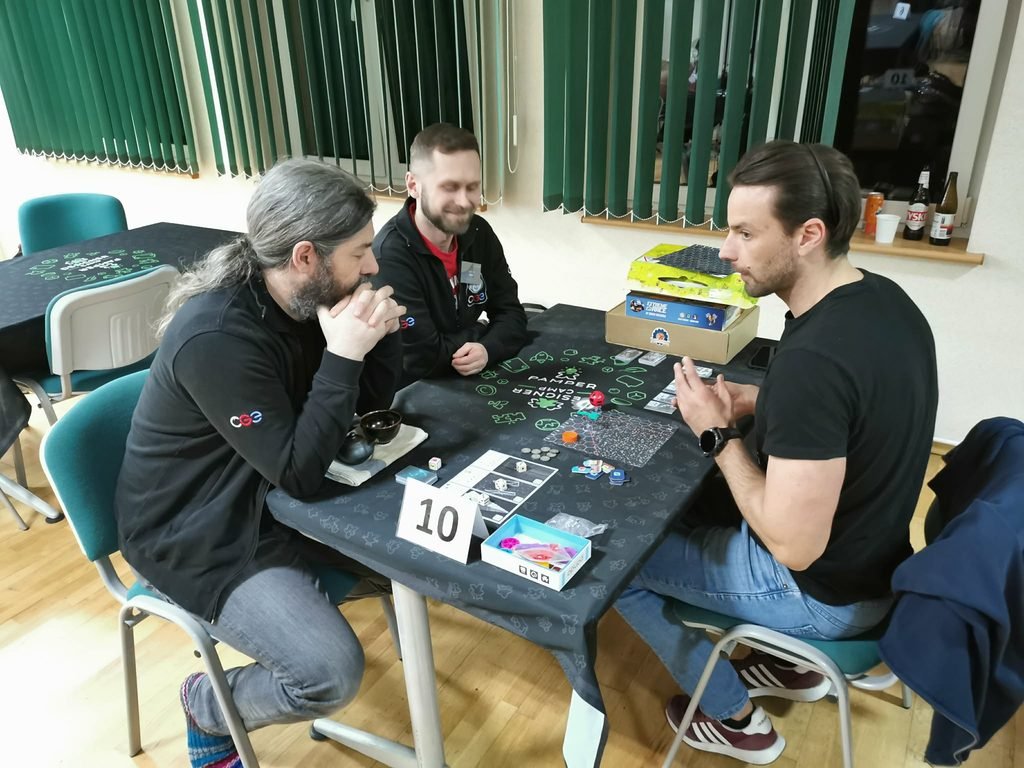
The entire program is structured so that the main focus is on playtesting: moderated sessions (3–5 designers) and informal gaming evenings are complemented by 30–60 minute lectures on board game industry topics.
An important part of the event is the matchmaking sessions, where designers meet publishers in pre-arranged meetings.
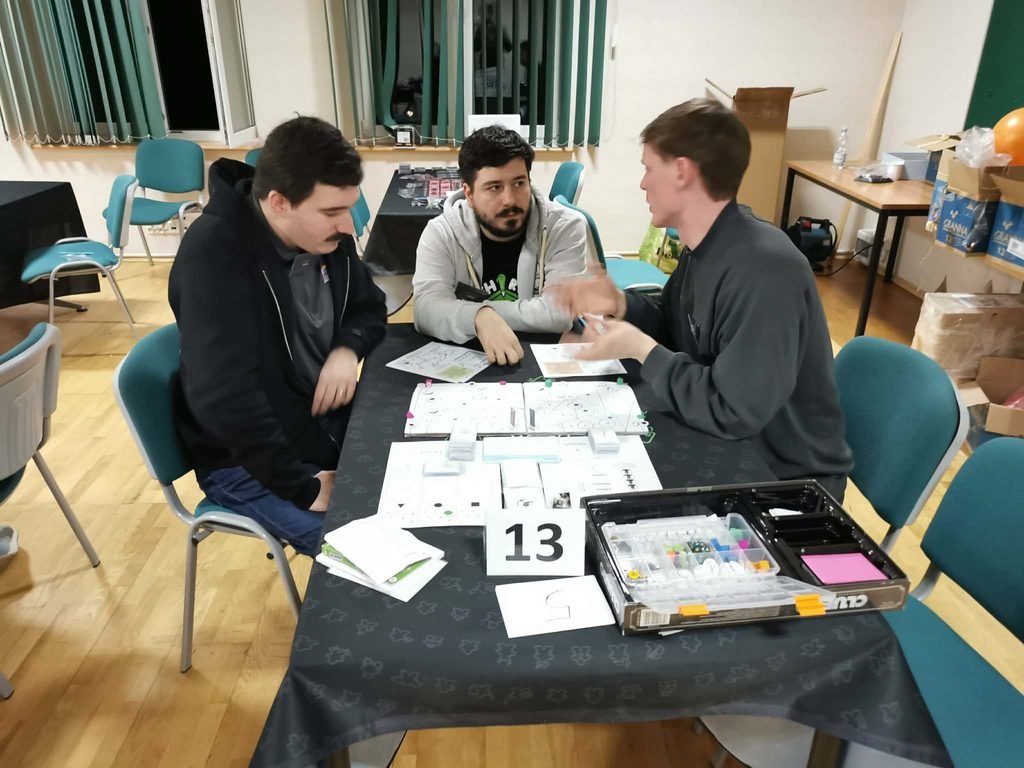
During these, I had the opportunity to present my projects to representatives of Asmodee USA (including the Z-Man and Days of Wonder lines) as well as Korea Board Games.
I presented the games “K2-18b” and “Babelis.” Neither prototype was successful, but I received valuable insights into the direction I should take and what each publisher is actually looking for.
These meetings are particularly valuable because they allow you to evaluate the production aspects of your games, the uniqueness of their themes and mechanics, and to understand whether your game is worth existing at all.
This format allows you to quickly see what needs to be done if you want your game to have a future.
It is also worth mentioning that this year the camp included companies such as Rebel, Czech Games Edition, Portal Games, Granna, Go On Board, Albi, and Glass Cannon Unplugged, whose representatives play games from morning until evening.
Therefore, anyone can present their games, regardless of whether they were selected through the matchmaking system or not. This means that designers largely create their own opportunities.
I am very satisfied with the experience, and next year I plan to bring one larger-scale game as well as several party-style, casual prototypes for relaxation and more dynamic sessions.
Dmitrijus Babicius
What did your daily routine at the camp look like?
Since I am a person of a very chaotic temperament, it would probably be difficult to define a consistent routine over those few days.
What I can say is that I tried to participate in every lecture, playtest, and other activities included in our schedule.
I would say that one of the main advantages of the camp is that it didn’t allow you to get bored or be lazy.
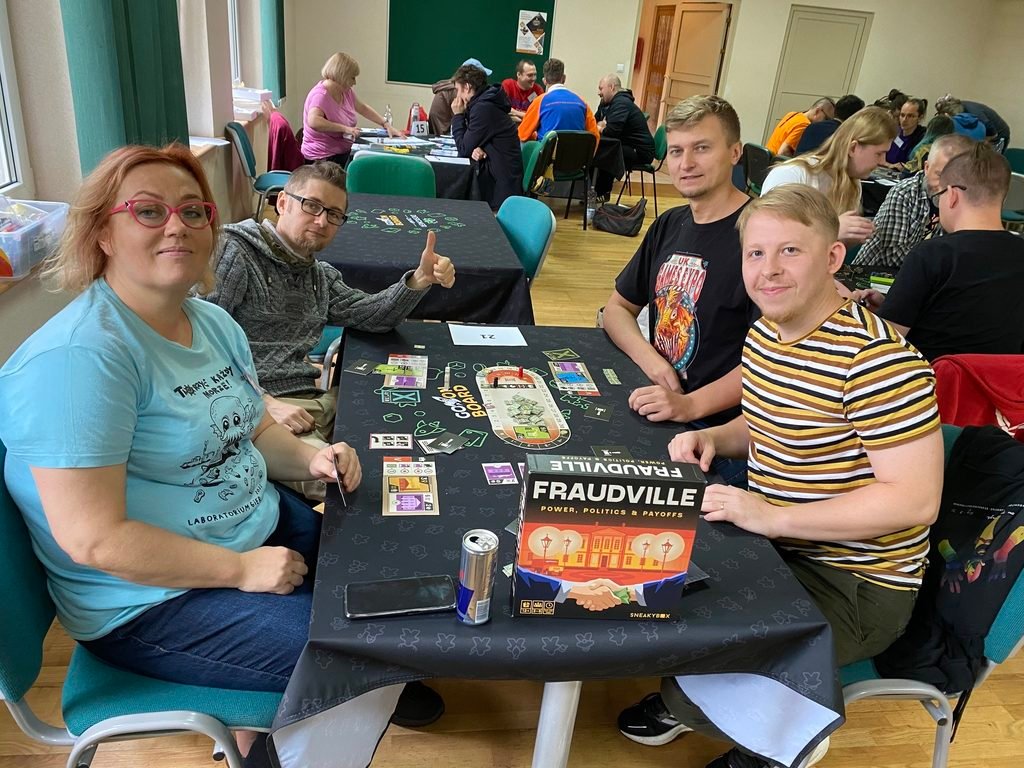
After breakfast, we had lectures and playtesting, then lunch, meetings with publishers, and more lectures.
After dinner — more free time, but since we tried to make the most of it, we often stayed in the playtesting hall until 2 a.m., playing our own and other designers’ games.
During testing, there were moments of such high-quality feedback that you realized you could improve your game immediately, even though it had previously seemed quite polished.
I would say there were many “Eureka” moments and reflections that some projects still needed more work — they had not yet fulfilled their potential.
How was this camp different from 2025?
A ridiculously boring answer — it was almost no different.
A high-quality, focused, and well-organized event.
The only difference was that this time there was no pitch competition.
However, I myself had changed — since I knew what to expect, I used my time more efficiently and prepared better.
Tomas Miliauskas
I remember the first time I attended Designer Camp in Poland a few years ago.
I had to present my game, into which I had invested a lot of time and expectations.
I was very confident with my “perfect game X.” It was my trial by fire.
The game was completely torn apart right in front of me.
I received not only harsh criticism, but also a fair amount of friendly mockery…
And although it hurt, we immediately moved on to testing another designer’s game, which received no less fire.
That’s when I realized — the people at the table were just like me, ordinary individuals with a vision inside a box lying on the table like a piece of meat surrounded by hungry wolves.
This is not a place for praise, but for extremely critical analysis of game design, where every problem is dissected down to the smallest detail.
Board game creation is not just about enjoyment. It is complex, demanding work.
If you don’t accept it with that mindset, your games will remain average at best.
This place taught me to strive for professionalism and discipline in game design — to constantly learn, search for more interesting solutions, and maintain the highest standards.
Beyond that, I met many interesting people with whom we had long discussions about game design, the industry, creativity, and sometimes simply enjoyable conversations about everyday life, music, travel, and other topics.
We do not have this in Lithuania — there simply are no such deep traditions as in neighboring countries like Germany, the Czech Republic, or Poland.
We are trying to catch up to where they were 10–20 years ago.
Glass Cannon Unplugged, Portal Games, Go On Board, Awaken Realms, Rebel, and other publishers are highly advanced in publishing.
Therefore, in Lithuania, if we want to achieve similar success, we must set the highest standards for ourselves, because the profession of a game designer demands that level of respect.
Andrejus Avchimovičius
A lesson for myself and for beginners: whether a prototype is a short five-minute game or a complex strategy, each has the same power to bring players together and create unforgettable moments.
What moment or result are you most proud of?
I am proud that I managed to interest and present my prototypes to some of the largest publishing companies in Europe and the world.
How important is it to be able to present a game well?
Very important. Such opportunities are rare, so you must not mess up and must present well.
At the table, I heard that people still often fail to distinguish between pitching a game and explaining its rules. This significantly holds them back.
Tadas Kastanauskas
Did your perspective on board game creation and its evaluation change after this camp?
Yes and no.
Nowadays, people create a lot of games. From their work, you can clearly see dominant genres and mechanics.
Since I have been creating games for several years, I would say that as soon as you sit down with another designer’s game, you can quickly assess their level.
When I look back at the early prototypes I used to show publishers, it even makes me smile.
When you create your first games, you wear rose-colored glasses — it feels like the idea that just formed in your mind and became something physical and tangible is an incredibly good game.
We all make very similar mistakes at the beginning.
There are no miracles — only consistent work with the initial prototype, constant iteration after each playthrough, cutting unnecessary “fat,” removing excessive rules, and sometimes even changing the theme helps you gradually move toward a functional game.
And when everything seems finished, working, no longer breaking or stalling, you pause and look around.
Around you, there are about 1300 games released every year, of which perhaps a hundred or so are similar-style eurogames, another twenty share the same medieval Venice economic theme, and around 80–90% use standard eurogame mechanics and rules.
And then you ask yourself: do publishers really need another game similar to those already released and loved?
Despite that, we all look for our place under the sun, because this luxury goods auction mechanic with bribery elements that you came up with is unique and has never been seen before 😉
What decision during the camp are you most happy with?
This year, I attended the camp for the second time.
And it just so happened that during my first visit two years ago, I had not yet released a single game.
What can I compare that feeling to… let’s say it’s like playing as a striker in a Sunday football league but not scoring a single goal in four years 😀
So yes, there was quite a bit of anxiety during the first year.
Although we had already had our first “initiation” at Essen Spiel 2023, where we met several publishers who were, in general, very polite and “soft.”
At the Polish event, testing is intense — practically 12 or more hours per day.
And the designers there do not sugarcoat things — they criticize very constructively, sharply, with suggestions and examples; you can barely keep up with taking notes.
And if your “unfinished nonsense” was tested by industry veterans like Bruno Faidutti or Asger Granerud, your legs would start shaking 🙂
What I really liked about the Polish approach was note-taking and marking feedback during sessions — it’s a common and very useful practice.
In short, it took time to “grow thicker skin,” allowing you to calmly accept feedback, thank the players, and understand that only through this process do better versions of games emerge.
So, returning to the question, this year felt calm, and it was simply enjoyable to be at the camp with familiar organizers and returning designers from other countries.
I brought fairly well-developed prototypes, heavily tested in the “Prototipas” club and at various events, such as the updated “4 Islands” and “Flickomania.”
It would be difficult to point out that something fundamentally wasn’t working, so the main goal was to put the final touches on them.
By the way, when I said there are no miracles, sometimes there might be something close.
At the camp, I presented a game called “Cockroach Twister” (“Tarakonų lenktynės”), co-created with Andrejus Avchimovičius, Jonas Kupė, and Marius Skarupskas.
It is a simultaneous movement game originally intended for children and families.
But something remarkable happened — since all participants at the camp are adults, it turned out to be an excellent party game as well.
Testers were impressed by the extremely simple rules and actions, and most importantly, from the very first round, players were laughing, clapping, and shouting in excitement.
And that is the most essential thing a game can deliver.
It once again shows that sometimes not complexity, but sincere simplicity and the joy a game creates, is the path to success.
What is your next step?
After returning from the camp, the first step is to revisit the prototypes, review and adapt the rules one last time, and communicate changes to the development teams.
Also, to define for the artists what moods and characters the games should convey, finalize all details, balance values, and complete negotiations with publishers.
It is clear that with continuous work, the refinement of prototypes has improved significantly.
Previously, you would just listen to publishers and agree with everything.
With experience, you become a more equal partner, able to discuss decisions, remove unnecessary elements, and think of ways to replace expensive components with cheaper but equally good alternatives.
We are also preparing for the now traditional board game event “Ateik ir žaisk” at the Martynas Mažvydas National Library on April 18.
There, we will spend the whole day playing new releases, modern classics, and prototypes by Lithuanian designers.
At the same time, it is already time to start preparing for the 10th anniversary of the largest board game festival in Druskininkai — “PineCon.”
For several years now, this event has also included a board game prototype competition.
So it is time to take out old prototypes from the drawer, dust them off, and look at them with fresh eyes.
Who knows — maybe your game will conquer the world next year.
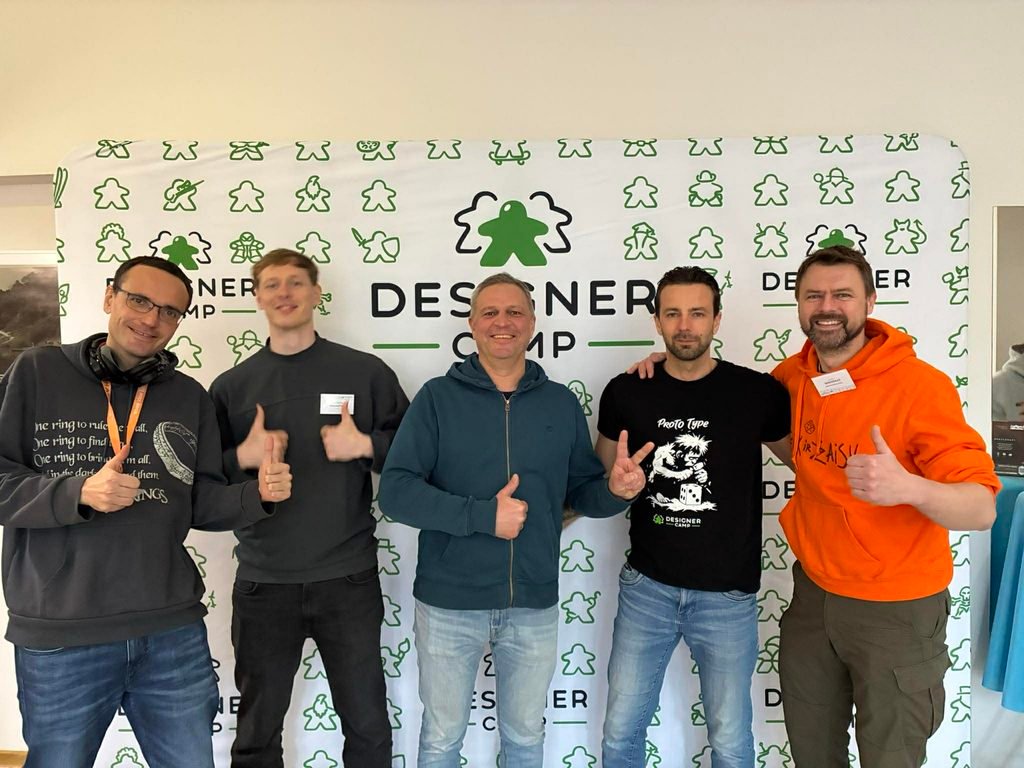
Let’s meet and play our games at Ateik ir Žaisk at the Martynas Mažvydas Library on April 18th!
Leave a Reply