

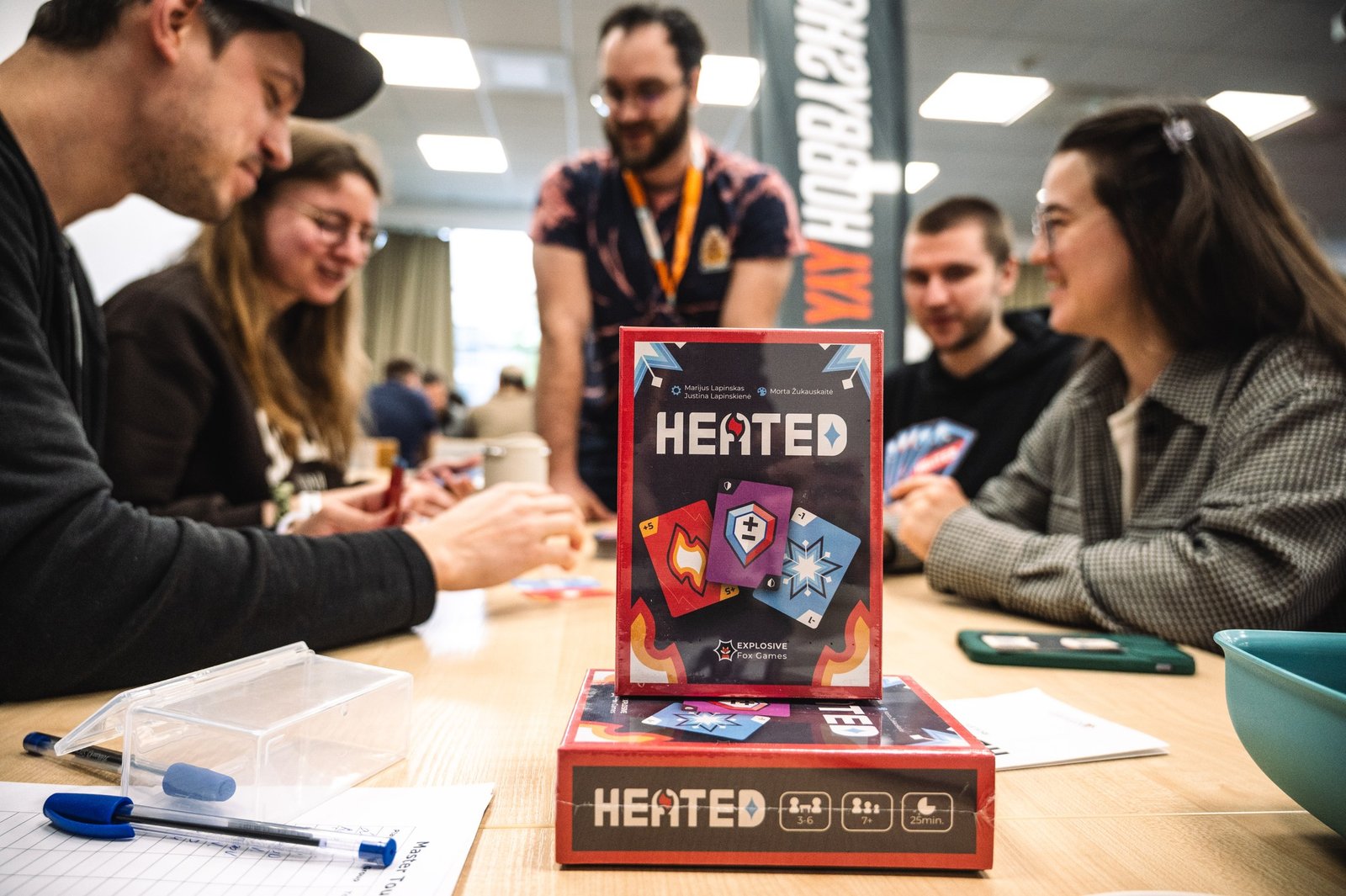
Marijus, how did you get into the world of board games?
It all started in childhood. I had quite a lot of Yu-Gi-Oh cards, and at some point I just wanted to make my own. Drew them by hand. That felt like enough proof I could actually create something.
When we got a computer, I got into video games, SA-MP especially. Playing on private servers, I kept noticing flaws I wanted to fix. The easiest solution was to just build my own server. That’s how programming started for me.
I found a game engine and, with some self-taught programming behind me, started making digital games. From then on, I wanted to be a game developer. For a long time, I kept building, exploring, and learning.
Then COVID hit. I had this itch to play something like D&D, but without a game master, where players could explore randomly generated dungeons with an actual story. Roughly: Guild of Dungeoneering, Gloomhaven, and D&D mashed into one. Still a prototype in a drawer. But after putting it out online, I got invited into a great guild of prototype builders and “breakers.” That’s where I learned to start small instead of jumping into something massive. Back in my teens, I dreamed of making something GTA-sized, but small, fast mobile games made more practical sense.
Probably a universal lesson.
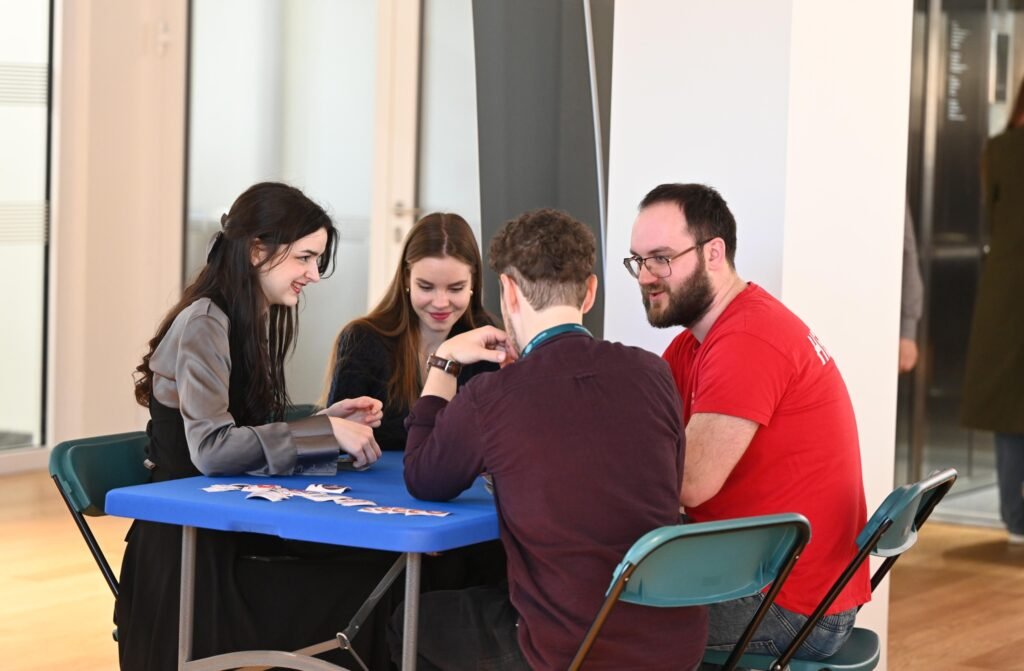
What are your favorite mechanics and top 3 games?
I like cooperative games, mostly because I lose a lot, whether from skill or the lack of it. Probably time to make peace with that.
Top 3 (in no particular order):
- Zombicide: Black Plague (and the whole line: Green Horde, White Death, same mechanics and compatibility)
- Terraforming Mars
- Dead of Winter
I should explain the picks. Remember I said I like to build and add my own ideas? These games make it easy to create unofficial expansions, and plenty already exist. I’ve contributed a little myself. 😉
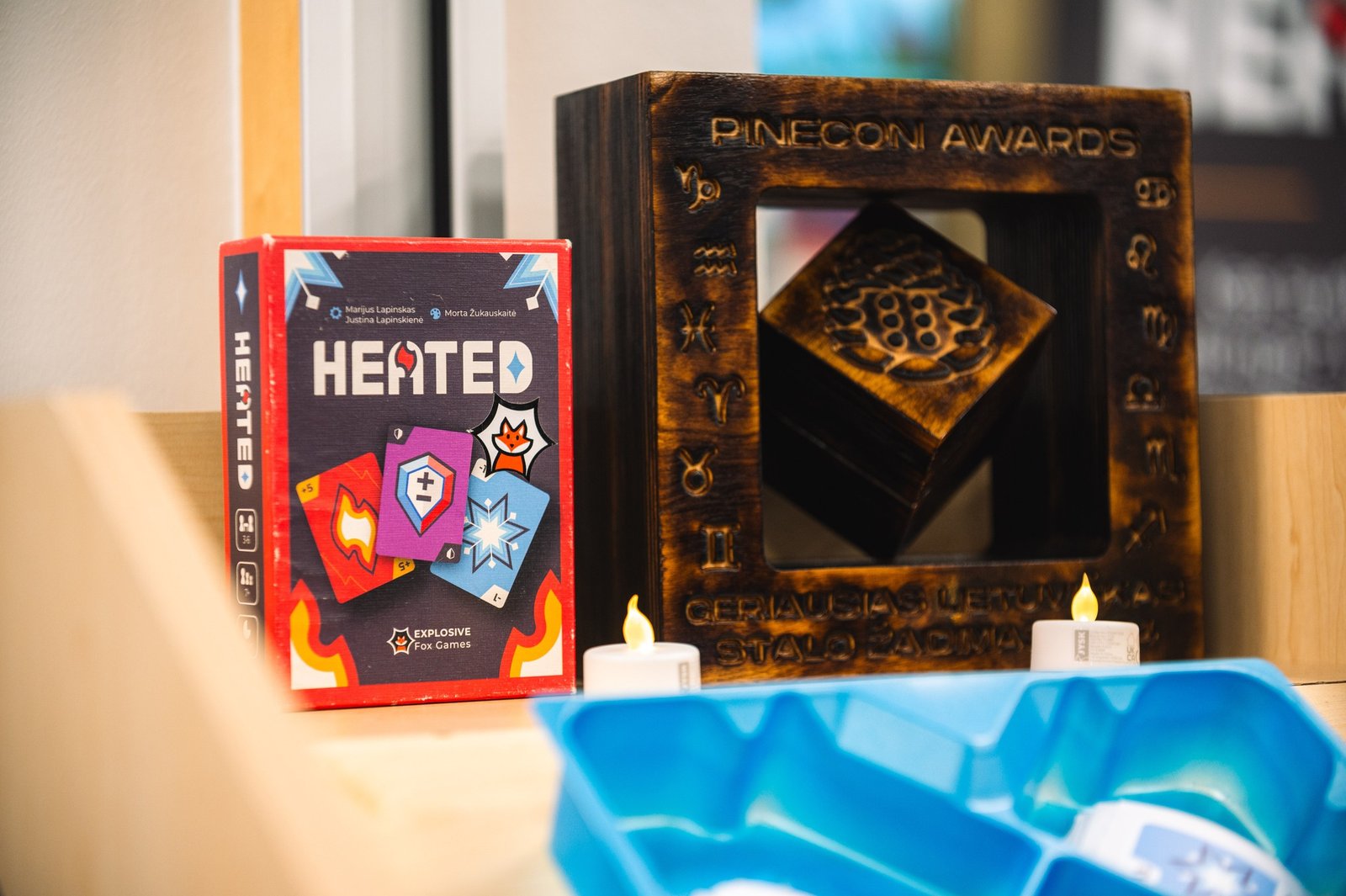
Your game Flow is one of the best-selling board games in Lithuania, and Heated won Best Game at PineCon 2025. What’s the secret?
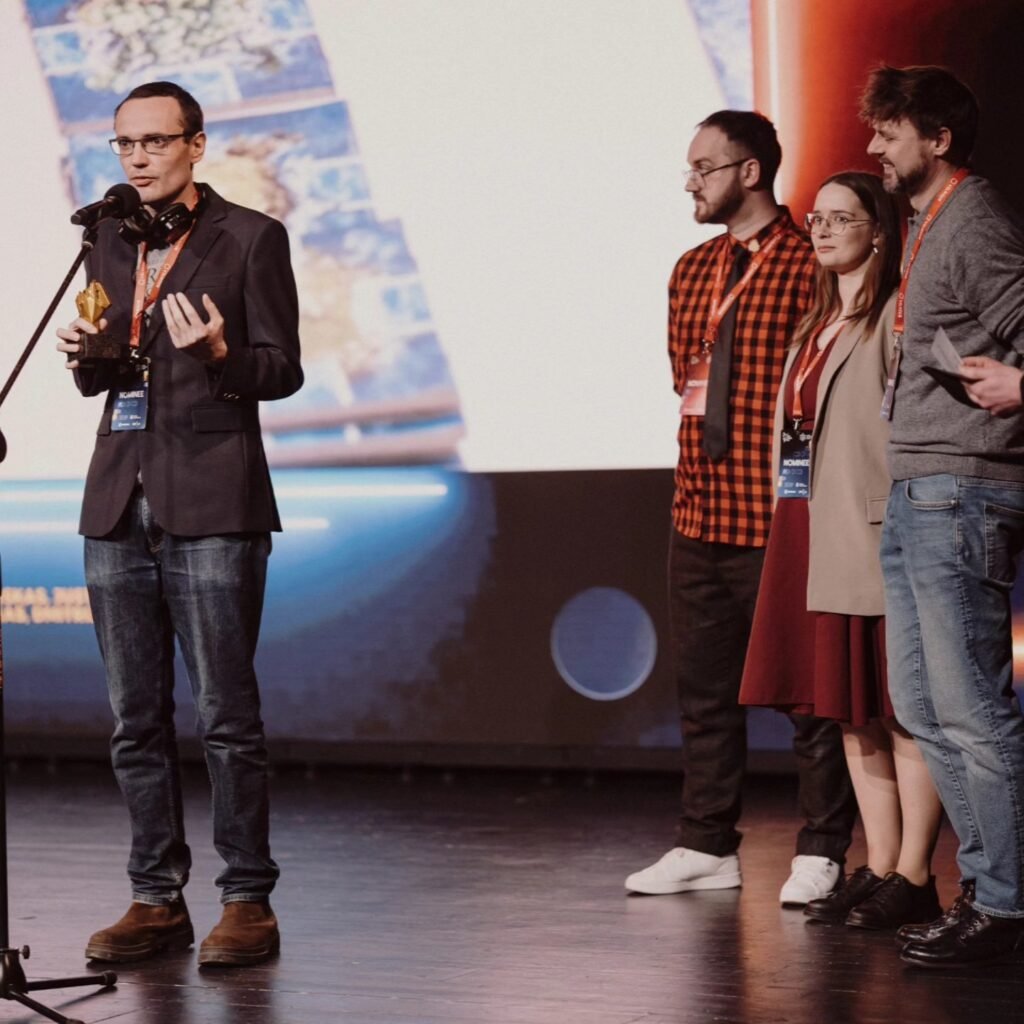
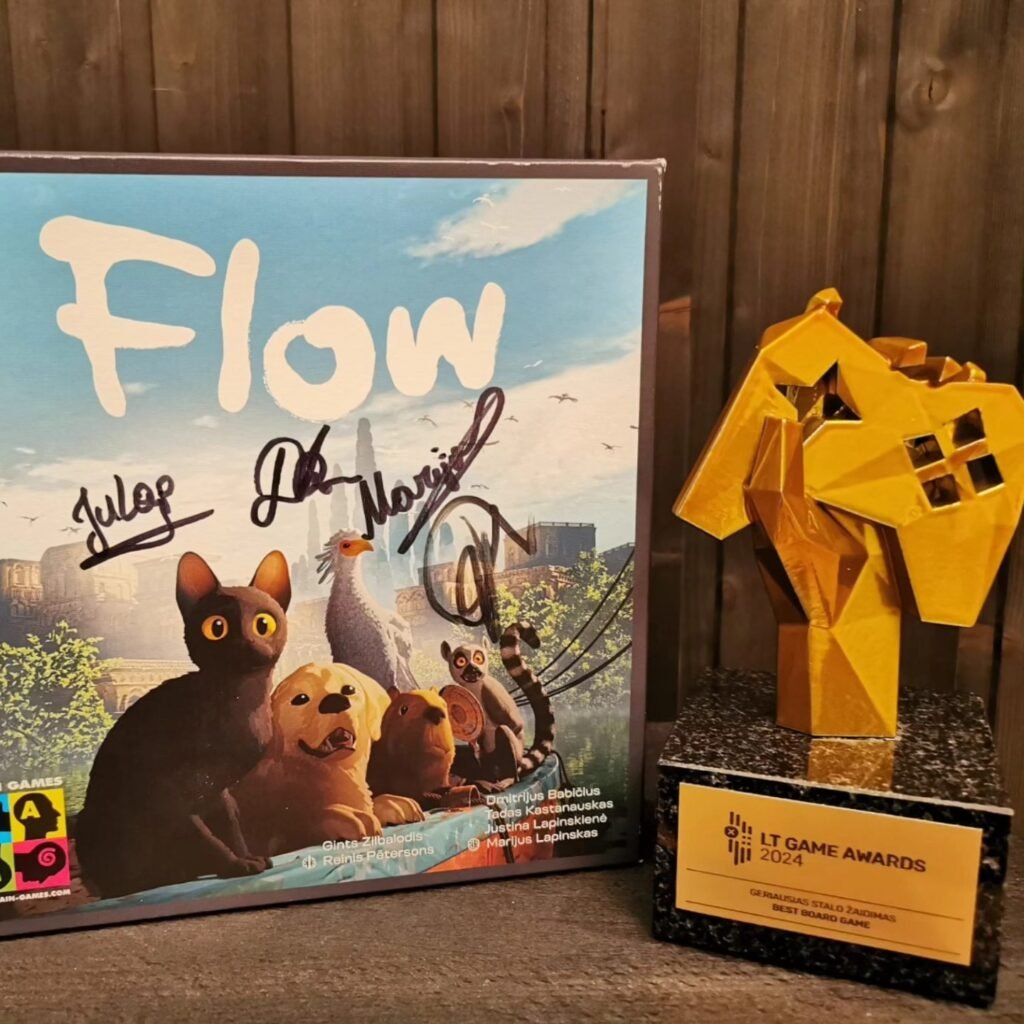
Flow also took Best Board Game at LT Game Awards, and Heated got People’s Choice at the same event. That one genuinely caught me off guard, in a good way.
There’s no secret. Anyone can create, I’m not an exception. Both games were built with co-creators. I’ll even admit we got lazy and stalled on one project. But, God willing, something new will come out of this year’s PineCon.
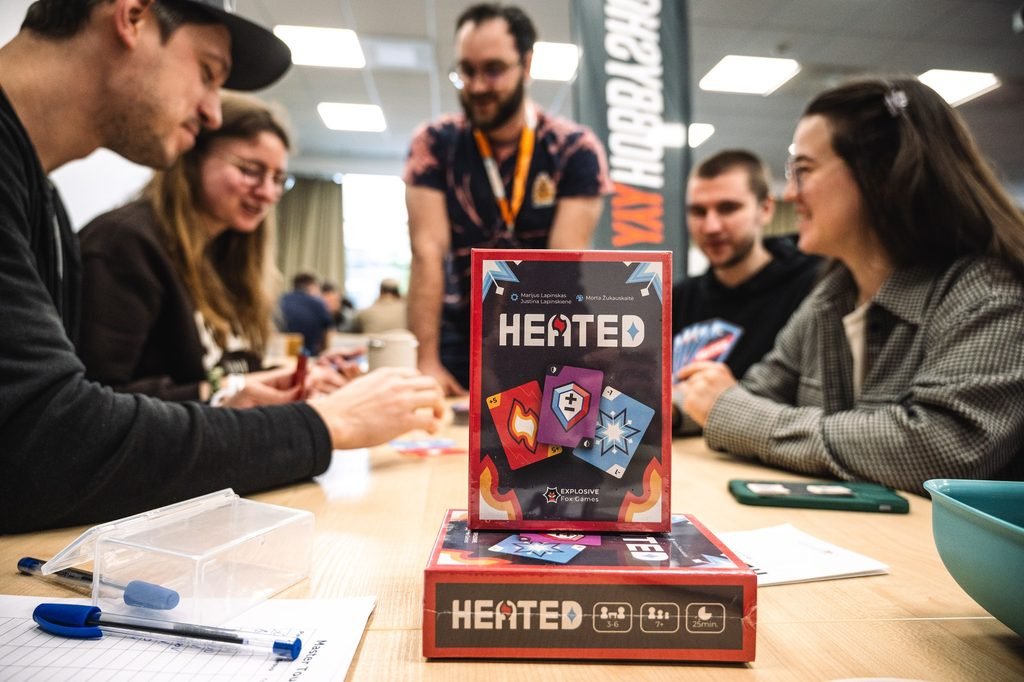
That event keeps being where things happen for the first time. Heated got its first real test in front of a larger audience there as a prototype. The next year we did the official debut at the same place. A year after that, we walked away with an award. Feels like a full cycle.
You’ve mentioned seeing board game creation more as a business than an art. How do those two sides sit in your work?
Honestly, I don’t remember saying that. But there’s some truth to it. If it were purely art, either everyone would get the games for free, or they’d sit on a pedestal for people to admire.
We live in a world where production costs money, time costs money, and everything costs money. In Lithuania, we actually have a fairly healthy level of competition. Most games are quite different from each other, so standing out through uniqueness is possible.
I think of myself as an artist, just not in the way most people picture it. I do draw, badly, of course, but I lean more toward technical fields. Programming is also a form of art. Some people write poems or books. I write instructions for a computer to carry out, which we call code. Kaulas.lt is a good example of that.
I’d rather be the person working behind the scenes. Attention is nice, but too much of anything isn’t healthy. Quietly helping, contributing, building one central place for the community, that feels like my role. Without dropping everything else, of course.
Tell us about the new game you’re working on.
This one is more of an experiment. A super fast project, small print run, made specifically for the cold beet soup festival.
I wanted to find out whether you can take a theme first and build a game around it. Until now, it always went the other way: mechanics came first, then a theme got wrapped around them.
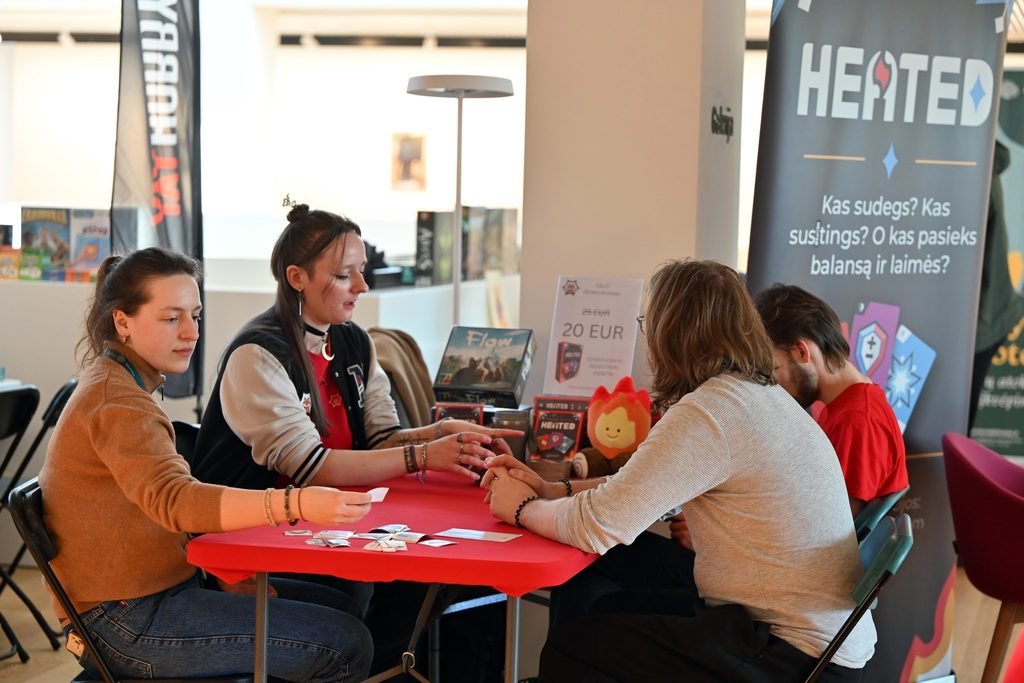
The result is a very fast, chaotic game that will probably make your hands hurt. The whole idea: flip cards, and the moment the right one shows up, slap the pile as fast as you can.
We’re planning to show it at PineCon and then go full throttle at Pink Soup Fest.
New game test at the event
Ateik ir Žaisk
What’s the vision for Explosive Fox Games going forward?
Simple: keep making games.
The hardest part is the first product. After that, the path is already there, and you just walk it. Knowing what I know now, I’ll be able to move faster and with better quality each time.
That said, I don’t think I’ll stick to board games only. Kaulas.lt isn’t a board game, but it brings just as much satisfaction. Who knows, maybe I’ll come back to digital games someday and make something like GTA.
At the very least, I’m pretty sure I could digitize Heated. And maybe that work has already started.
You’ve been creating for years. What are you most proud of?
For as long as I can remember, I’ve always been making something. Not just board or digital games. I’ve written poetry, worked with wood, sprayed paintings on canvas, and went to music school, so I’d say improvisation counts as a form of creativity too.
What brings me the most joy is seeing genuine, unfiltered reactions from people.
Two short stories.
Back in my early teens, around 5th or 6th grade, I was flipping through a store catalog and spotted a Christmas decoration, a reindeer. The price surprised me and I said out loud it was way too much for something so simple. My mom heard and suggested I try making one myself.
So I did, driven by the challenge. And honestly, I surprised myself. It wasn’t perfect, far from it, but my mom kept it on the windowsill not just during Christmas.
What does that have to do with board games? Nothing, maybe. Although when making prototypes, I joke that it turns into an arts and crafts workshop, so maybe little things like that helped develop the skill of building physical components.
The second one isn’t really a story. As they say, who else will praise the dog if not the dog itself, though lately I’ve been hearing “cat” instead.
Hearing people walk away from the table after playing my games or prototypes and say I’m really into this or I want another round, that’s what matters most to me.
There was even a kid who wanted to buy a game just because it looked beautiful, without even playing it. And recently someone said it was the best game at the entire event and the most worth its price.
I’d like to thank everyone who supports me and us, my wife included, who encourages, advises, and helps. Especially the board game prototype builders guild, Prototipas.
Thank you for being there.
Meet Marijus this weekend at the Pinecon X festival and try his games yourself!
Leave a Reply